Last updated November 18, 2026



Free written scope consultation - allowances, timeline, and change-order rules on paper before a single trade is scheduled
Construction Warning Signs: An Aventura Homeowner’s Reference Guide
In Aventura’s salt-air environment, the warning sign you can see is rarely the actual problem – it’s confirmation that a problem you couldn’t see has already been active long enough to surface. Catching it at the visible stage still costs a fraction of catching it at the failure stage. That distinction matters more here than almost anywhere else in South Florida. This guide covers the structural and systemic warning signs specific to Aventura’s coastal conditions: stucco that has lost its bond, corrosion creeping through fasteners and flanges, slab movement driven by a high water table, and roofing failures that start long before a shingle goes missing. You’ll also learn to spot contractor shortcuts after the fact, when the invoice is paid and the real cost is just beginning.
Quick Answer
The most serious construction warning signs in Aventura are not cosmetic. They are hairline cracks that keep growing, rust streaks at window corners and door frames, stucco that sounds hollow under a tap, granules collecting at downspouts, and caulk used where metal flashing belongs. Each one signals a problem that has been active for months or years, and each is far cheaper to fix now than after water or movement reaches the structure. If you see more than one at the same time, get a professional inspection before the next rainy season.
Styles & brands we work with
- Kitchen remodeling
- Bathroom remodeling
- Home additions & ADU
- Roofing
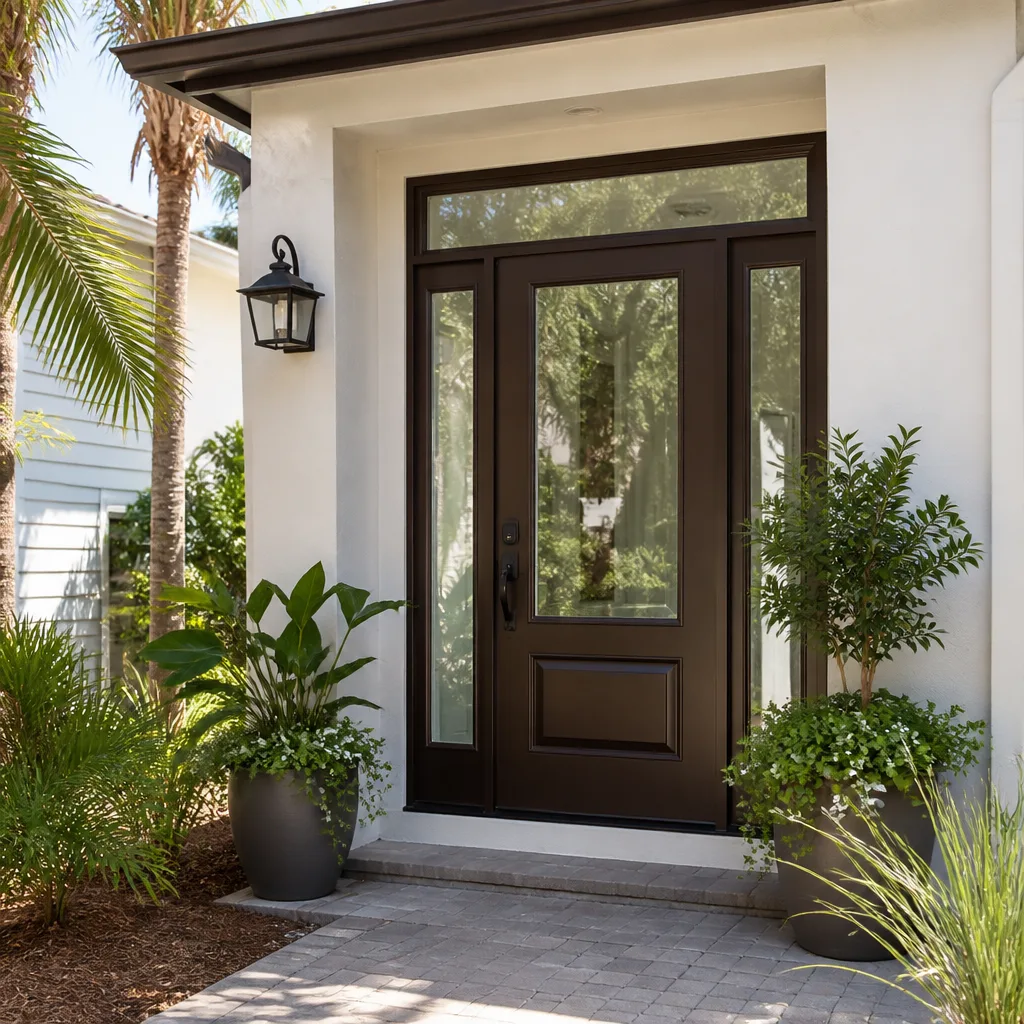
- Windows & doors
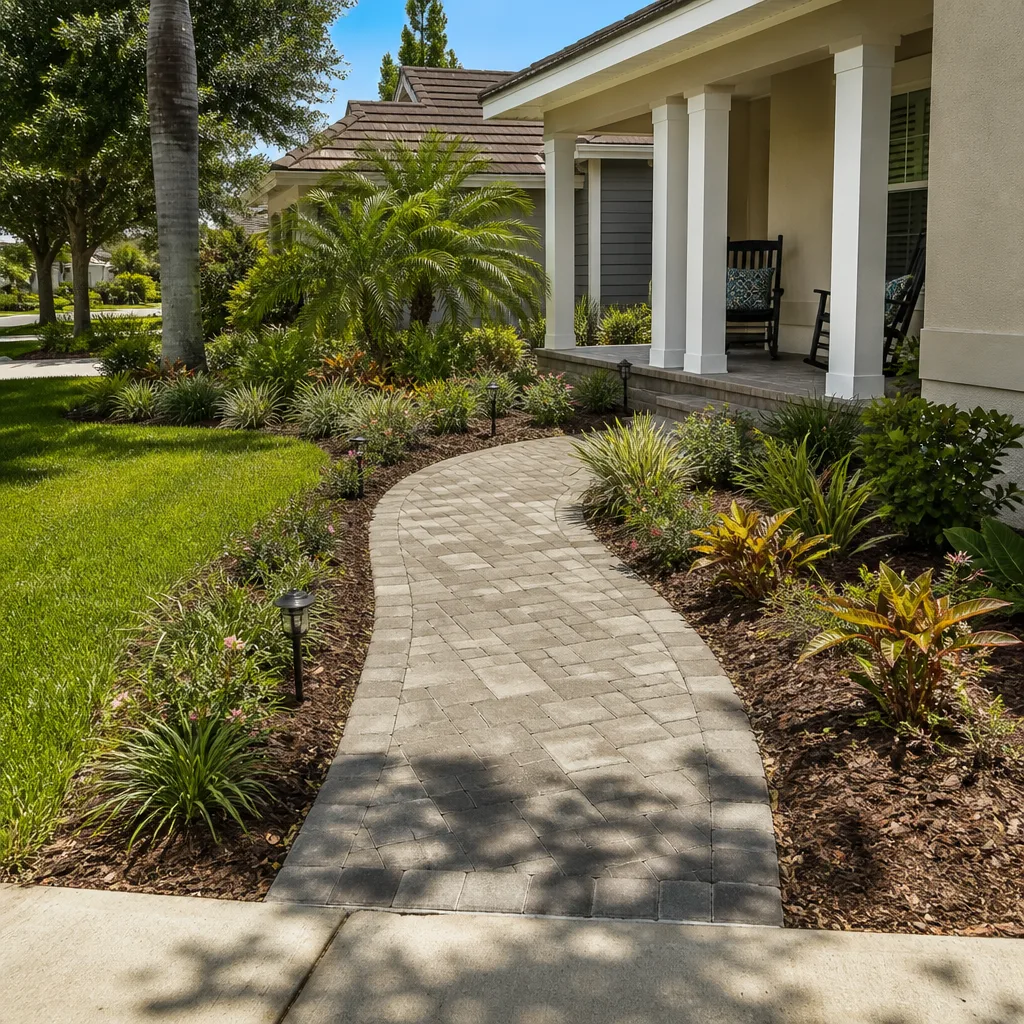
- Driveway & pavers
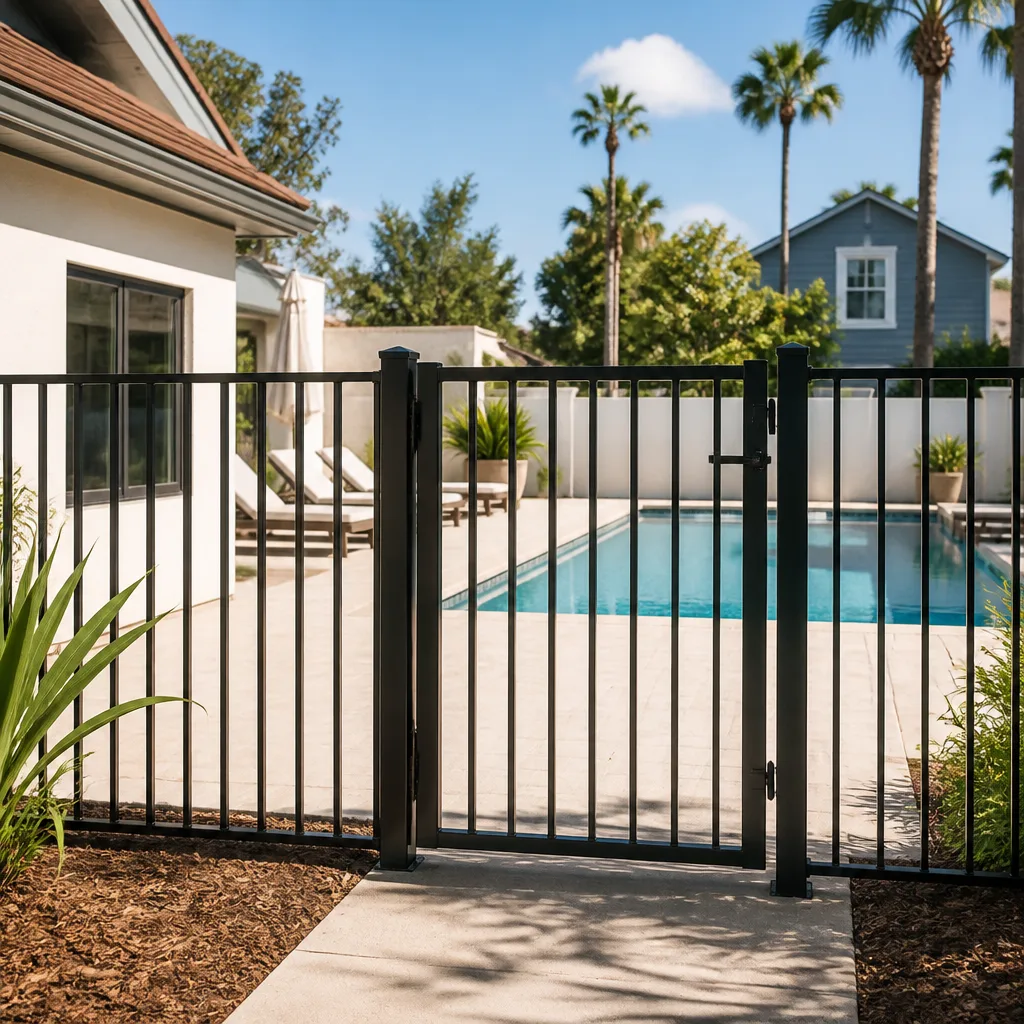
- Fence
Table of Contents
- Stucco Cracking vs. Stucco Bond Failure: How to Tell the Difference
- Salt-Air Corrosion: What Rust Streaks Are Really Telling You
- Foundation and Slab Movement in Aventura’s High Water Table
- Roof Warning Signs Beyond Missing Shingles
- Workmanship Shortcuts That Only Show Up Later
- Windows and Doors: The Coastal Failure Points
- Seasonal Timing: When Aventura Problems Surface
- A Practical Homeowner Inspection Checklist
Stucco Cracking vs. Stucco Bond Failure: How to Tell the Difference
Every stucco home in Aventura develops cracks, and most of them are not a structural problem. The key is learning which cracks are cosmetic and which mean the stucco has separated from the wall behind it. A cosmetic crack in the finish coat is usually fine, no wider than a hair, following a straight line at a corner or a joint. A bond failure is different: the stucco has let go of the substrate, and water gets behind it every time it rains.
Here’s the practical test. Tap the wall gently around the crack with a screwdriver handle. Sound stucco gives a solid, dense thud. Stucco that has lost its bond gives a hollow, papery sound, like tapping a drum. A hollow sound spread across more than a few square feet is a repair, not a patch.
What each scenario means for scope:
- Hairline cracks at corners or control joints: Cosmetic. Usually filled and repainted. Small repair.
- Hairline cracks that run across a large wall area with no pattern: Leave them for a few weeks and mark the ends with pencil. If they grow, they’re movement cracks and need a closer look.
- Hollow-sounding areas with visible crack lines: Bond failure. Water is already getting behind. The stucco needs to come off, the lath and substrate checked, and the whole area redone.
- Cracks with rust-colored staining at the edges: Corrosion is happening behind the crack. See the next section.
- Diagonal cracks running from a window or door corner: Often indicates movement at the opening frame, not just the stucco. The window or the framing above it needs inspection.
In Aventura, the driving factor is salt air and wind-driven rain. Rain pushed sideways at storm strength gets into cracks that would never see water in a calmer climate, and the salt left behind after every storm keeps the stucco slightly corrosive. That’s why we recommend homeowners walk the exterior walls after every named storm and touch up any new cracks within a few weeks, not a few years. The same pattern shows up across the region, and if you’re weighing a larger exterior repair or an addition, our team handles Home Additions & ADU in Aventura with the same attention to envelope integrity.
Salt-Air Corrosion: What Rust Streaks Are Really Telling You
A rust streak on a door frame or under a window is not just weather. It’s the visible evidence that a metal fastener, flange, or anchor has been corroding behind the finish for years, and that the substrate around it has been absorbing moisture the whole time. This is the single most common pattern we’ve seen on Aventura homes, and it’s consistently misread as surface staining.
Salt air accelerates corrosion on anything steel. Standard fasteners, door frame anchors, window flanges, and wall ties all degrade faster within a mile or two of the water. The bright orange rust is the late stage – by the time you can see it, the metal has already lost cross-section and the material around it has been wet.
What rust streaks indicate, by location:
- Rust at the corners of window or door frames: The window flange or its fasteners are corroding. The seal around the frame is likely compromised, and the wall cavity behind it may be wet. This is a removal-and-replace job, not a sealant job.
- Rust streaks running down from under a window sill: Water is getting behind the sill and finding the fasteners. Check the flashing first.
- Rust on garage door tracks and hinges: Normal surface wear, but a sign that the hardware needs a fresh protective coating. The bigger concern is rust at the bracket that anchors the track to the wall.
- Rust stains on stucco with no obvious metal nearby: Wall ties or lath fasteners are corroding inside the wall. Get this inspected – it’s the hardest warning sign for a homeowner to assess alone.
Coastal homes often replace windows with impact-rated units from PGT, CGI, or CWS for hurricane protection, and the performance of that protection depends entirely on the installation: stainless or hot-dip galvanized fasteners, sealed flanges, and proper flashing. A window installed with the wrong fasteners will pass inspection and fail in six to ten years in Aventura’s air. Full-scope window work is a big decision, and it’s worth knowing what a proper installation looks like before you approve a bid.
Foundation and Slab Movement in Aventura’s High Water Table
The same crack pattern that would be minor in Phoenix can be serious in Aventura, and that comes down to the water table. When the ground beneath a slab stays saturated for most of the year, soil behaves differently from dry-climate soil. It expands and compresses seasonally, it carries dissolved salts, and when it drains, it can consolidate and leave voids. Cracks that follow those movements are telling you something specific.
In Aventura, our soil is almost always wet at some depth, so the driver is not slow drying and swelling. It’s water movement: drainage that concentrates water at one corner of a slab, irrigation that feeds constant saturation, or a slow leak from a plumbing line under the slab. When that water moves soil, the slab can settle unevenly at one edge or corner.
Warning signs specific to South Florida slab and foundation behavior:
- Doors that suddenly stick or won’t latch at one room, not the whole house. A single door that used to close is a warning sign; a whole house’s doors that are slightly stiff is weather and humidity.
- Diagonal cracks at a masonry corner, wider at the top than the bottom. Often indicates differential settlement – one part of the slab dropping faster than the adjacent part.
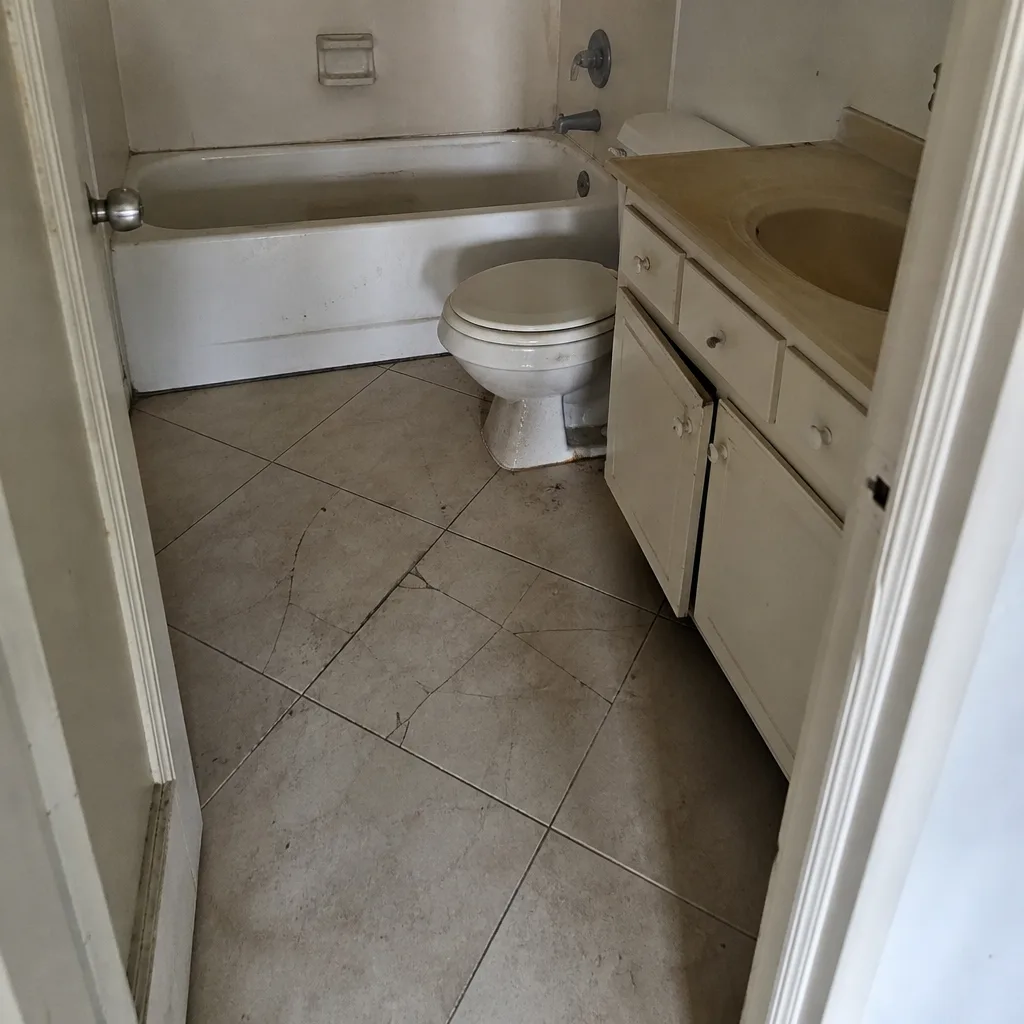
- Tile floor cracks that follow a straight line across multiple rooms. The slab is moving under the tile. Mark the ends and track whether it grows.
- Gaps between baseboards and the floor that appear or widen on exterior walls. Sill plate or frame movement, often with moisture behind it.
- Water pooling against the slab edge after rain, holding for 24 hours or more. Poor grading is driving water against the foundation. Fixing the grading is cheaper than fixing the slab.
If you see any of these, take photos with a tape measure next to the crack and re-check it in 90 days. Cracks that grow need a structural evaluation. This is the one category of warning sign where guessing is genuinely expensive, and it’s why a free estimate from a licensed builder is worth more than any online self-diagnosis.
Roof Warning Signs Beyond Missing Shingles
Missing shingles are the warning sign everyone knows, and by the time they’re missing, the roof has usually been failing for a year or more. The earlier warning signs – granule loss, membrane separation, flashing gaps – are quieter but far more useful. Reading those signs is what gives you the option of a targeted repair instead of a full replacement.
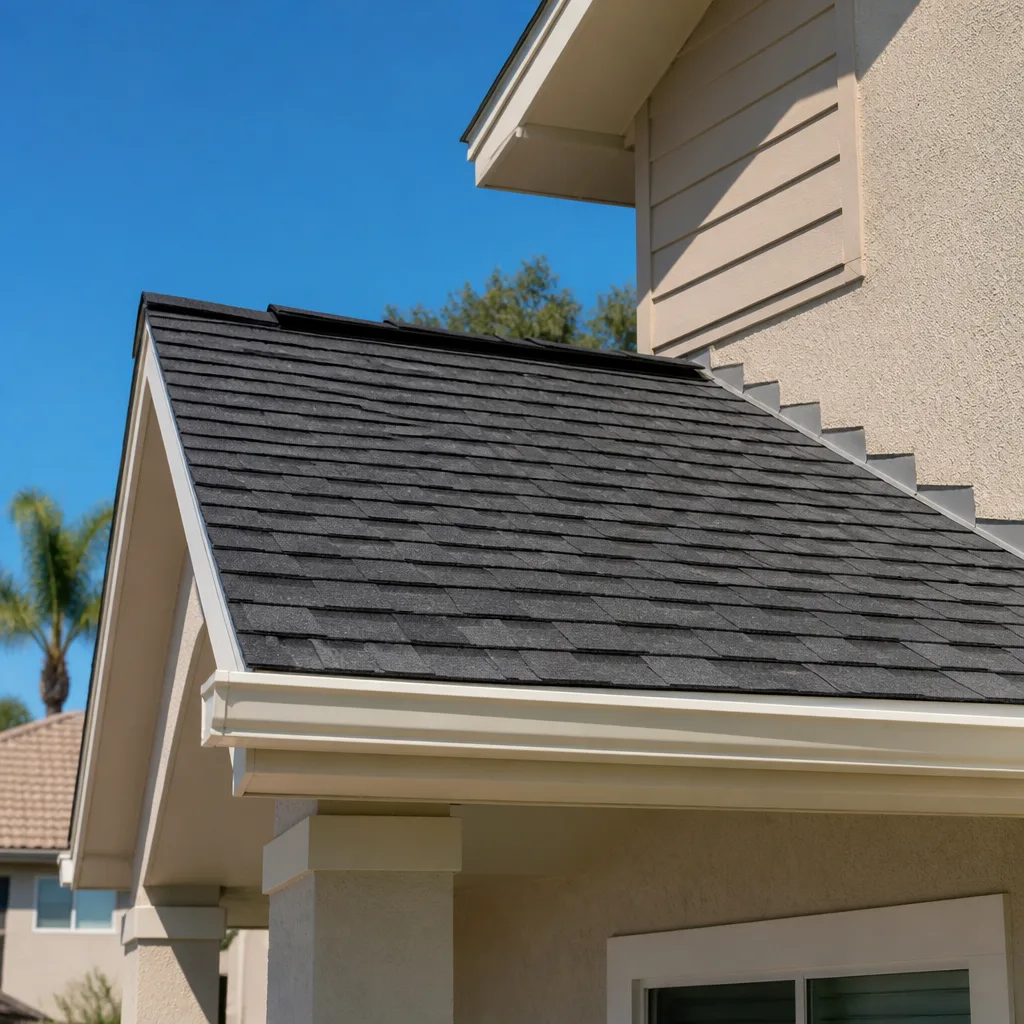
Granule loss. Walk around the perimeter of the house after a heavy rain and look at the ground, the gutters, and the bottom of the downspouts. Granules are the protective surface of a shingle; the coarse grit collects at the base of the downspout when the roof is shedding them. A few granules are normal on a roof of any age. A visible accumulation of grit in the downspout outlet after a few storms means the shingles are approaching the end of their protective life. On a roof near the coast, this happens faster than inland because UV, salt air, and wind-driven moisture all work on the shingle at once.
Membrane separation. Get a look at the roof from a safe vantage (from the ground, from a second-floor window). A shingle that has visibly lifted or curled at the edge, or a seam that looks like it’s peeling back, is membrane separation. The shingle is no longer sealing, so water gets under it. Wind-driven rain in Aventura will find any separation within a season.
Flashing gaps. Flashing is the metal around chimneys, vents, skylights, and roof-to-wall junctions, and it’s where most roof leaks actually start. Look for caulk that has cracked or failed around a vent or at a wall junction, gaps where the flashing meets the shingle, or a flashing edge that’s lifted. Caulk over a gap is not flashing – and it will fail within a couple of seasons. GAF and CertainTeed both make flashing and accessory systems that last decades; the flashings on a properly installed roof should be metal, mechanically fastened, not a bead of sealant.
A simple step-by-step inspection between professional visits:
- From the ground, look at the ridge line – is it straight or sagging?
- Scan the roof for shingle edges that curl up, or shingles that are darker or lighter in patches.
- Check every visible vent, chimney, or skylight for cracked caulk or lifted metal.
- Look at the ceilings inside on exterior walls for staining or bubbling, especially after a storm.
- After a heavy rain, check the downspout outlet for granule accumulation.
- If any of the above show problems, call a professional for an inspection – do not get on the roof, especially a steep one or one that’s wet.
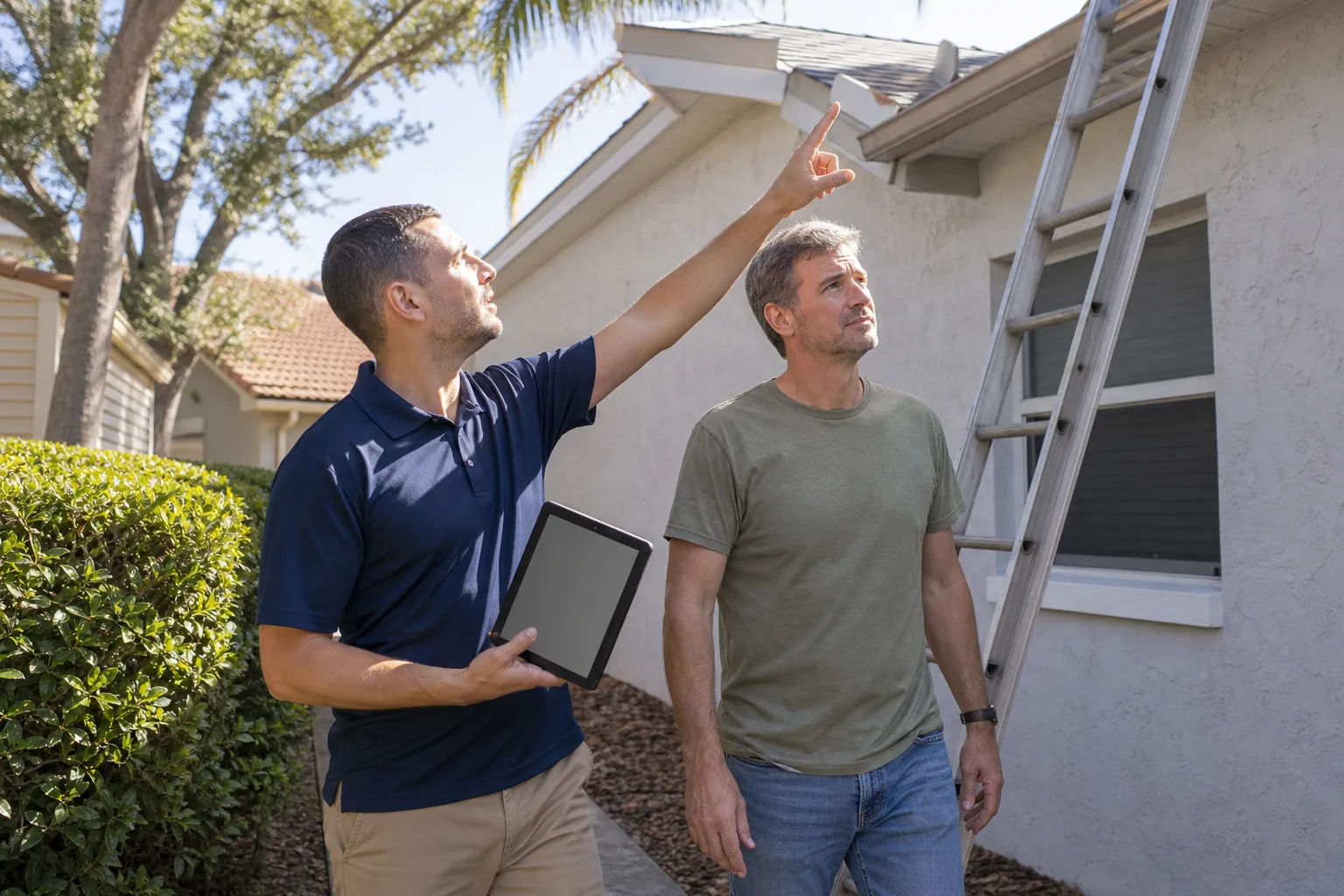
Do not attempt to diagnose a roof yourself from the roof surface. Steep-slope and tile roofs, particularly on Aventura’s taller homes, are genuinely dangerous to walk. Our roofing inspections are done by trained technicians with proper fall protection, and the estimate is free.
Workmanship Shortcuts That Only Show Up Later
Some of the most expensive problems in an Aventura home aren’t from storm damage or age – they’re from a contractor who took a shortcut during a renovation that looked fine on the final walkthrough. These are the warning signs that show up five years after the work is done, when the warranty (if there was one) has run out and the fix is now your problem. Here’s what to look for, whether you’re inspecting existing work or vetting a new contractor.
Caulk where flashing belongs. Caulk around a window flange, a chimney, or a wall penetration is a temporary seal. Proper construction uses metal flashing, lapped and fastened so water runs off and away. If you’re looking at a recent renovation and see thick, uneven caulk where two materials meet, ask the contractor whether there’s metal flashing under it. If the answer is vague, there’s likely not.
Grout inconsistency in tile. Grout that’s a different color or width in one room or one wall section often means the tile was installed over a substrate that wasn’t fully flat, or set on a different day and never fully leveled. It’s a warning sign of a faster, cheaper installation that will crack at the transition.
Drywall seams visible through paint. A properly taped and mudded drywall joint is invisible. If you can see a seam or a ridge under the paint, the finish was rushed.
Missing or undersized fasteners. Correct fastener schedule is a building code requirement – too few nails in sheathing, wrong fastener type, or missing hurricane straps that the plans called for. This is one of the reasons we always recommend a permit and inspection; you cannot see this in the finished wall, but an inspector checking the open framing will catch it.
Rushed curing. Concrete poured and then loaded or painted before it has set properly cracks early. You cannot tell at the time, but the first season of heat will reveal it.
Fencing and paving done without proper base prep. For paving, a base that wasn’t compacted in lifts will fail within a couple of years. That’s why we pay close attention to base preparation on Driveway & Pavers in Aventura and on Fence Installation in Aventura – the base is invisible in the finished product and it’s the difference between 10 years and 25.
Windows and Doors: The Coastal Failure Points
Windows and doors are the most common place a coastal home fails, and the signs are usually visible before the failure. In Aventura, the warning signs cluster at three locations: the frame perimeter, the sill, and the operating hardware. A window that sticks, a door that won’t close flush, or fog between the panes are all early signals.
Foggy glass (seal failure). Double-pane windows have a sealed gas space between the panes. When the perimeter seal fails, moisture gets in and you get a hazy band or fog at the edge of the glass, usually worst in the morning. On an impact-rated window, a failed seal doesn’t necessarily mean the pane will fail structurally, but it does mean the insulation value is gone and the window needs replacement. In Aventura’s climate, seal failure in ten to fifteen years is common on cheaper windows and rarer on quality units installed correctly.
Corrosion at the frame perimeter. Look at the fasteners at the frame corners and along the sill. If they’re rusting, the seal has failed and the frame is absorbing moisture. High-quality impact windows from PGT, CGI, CWS, or ES Windows are designed to last decades when installed with proper stainless fasteners and sealed flanges. The same window installed with the wrong fasteners will fail in a fraction of that time.
Doors that won’t latch, or light through the frame gap. A door frame that’s moving is a warning sign of either settlement (see the foundation section) or a failing sill that has let water in at the threshold. This one is worth checking every year in Aventura, because the threshold is the lowest part of the frame and it gets the most water.
For impact-rated windows, hurricane performance and long-term weather performance are linked. The wind-borne debris impact rating only holds if the frame is solidly anchored with the right fasteners and the flashing is intact. If you’re evaluating a window replacement, ask the contractor to specify the fastener type and the flashing method. A serious bid will answer that in writing.
Seasonal Timing: When Aventura Problems Surface
Construction warning signs in Aventura follow a seasonal pattern, and knowing it helps you catch problems at the right time. The wet season runs roughly from June through October, which is when water-driven warning signs – interior stains, bubbling paint, mold odor – appear. The dry season from late fall through spring is when movement and corrosion signs become visible. A fence post that was loose in the wet season may look fine by spring, but it’s still loose.
The pattern we see across Aventura:
- After the first heavy storms of the wet season: Every crack and flashing gap becomes a water entry point. This is when interior stains appear on ceilings and walls that had no sign of trouble the week before. Check the interior perimeter after the first storm of the year.
- Mid-summer heating (thermal): Exterior paint and stucco finish can fail faster on south and west walls because of the sun load. The mid-summer dry month is when paint blistering is easiest to spot.
- Late fall: With the rain gone, movement cracks and settlement signs are easier to see because the soil has dried. Any crack that appears in late fall and grows through the winter is worth tracking.
- Hurricane season (June through November): Wind-driven rain is the stress test for every seal, flashing, and window. That’s when a window or door frame that was starting to fail becomes a visible problem. Walk the exterior the week after a named storm’s rain has passed.
Track the seasonal signs as a routine – mark cracks in spring and check them in fall, check for interior stains after each major storm, check downspout outlets after every heavy rain. It’s a ten-minute walk twice a year that consistently catches the biggest problems at the cheap stage.
A Practical Homeowner Inspection Checklist
Here’s a walkthrough you can do in about an hour, twice a year. This is the homeowner-level version, and it’s designed to catch warning signs before they become repair bills. Anything on this list that shows up more than once should prompt a professional inspection.
- Walk the stucco walls. Tap every exterior wall gently with a screwdriver handle. Listen for hollow patches. Mark any crack ends with pencil.
- Check the window and door perimeters. Look for rust streaks at frame corners and sills, check for fog between panes, and open and close each window once.
- Check door operation. Open and close each interior door. Note any that have started to stick or drag.
- Walk the perimeter of the slab. Look for cracks in the slab edge, gaps between baseboards and exterior wall, and any water pooling that stays for more than a day after rain.
- Get a ground-level view of the roof. Check the ridge line for sagging, check each visible vent and flashing for cracked caulk or lifted metal. Do not get on the roof.
- Look inside the ceilings. Check ceilings on exterior walls for stains, bubbling, or discoloration, especially after storms.
- Check the downspouts. Look for granule accumulation at the outlet after a heavy rain.
- Check the gutters and grading. Water should flow away from the house, not sit against the foundation.
- Check the tile grout and caulk. Look for grout that’s a different color in a patch, or caulk where there should be flashing.
- Check the fence posts and paving. Fence posts that wobble or paving that’s dipping in one area, especially after heavy rain.
Keep a small notebook or a phone note of what you see. Date every entry and take photos. If a warning sign is growing or multiplying, that’s the point to call. A second pair of eyes from a professional is a free estimate.
Common Mistakes to Avoid
- Assuming a hairline crack is fine because it hasn’t grown. A crack that’s been there for years might be fine, but a crack in Aventura that only appeared last season is telling you something changed – the water table, the grading, the flashing – and needs tracking.
- Caulking over a gap instead of fixing the flashing. A bead of caulk looks like a fix, but it fails in a couple of seasons, and when it fails, it takes a bigger problem with it. The real fix is metal flashing with proper lapping.
- Treating rust streaks as cosmetic. The rust you see is the late stage, not the early one. The fastener has been corroding for years, and the substrate behind it has absorbed water for those years.
- Hiring a contractor who won’t put the scope in writing. Vague bids and verbal promises are the most expensive shortcut. A proper estimate has line items, a payment schedule, and the warranty in writing before work starts.
- Skipping the permit to save time. An unpermitted repair can be a warning sign to a future buyer, and it means the work never got inspected. Water intrusion issues caught at inspection are often the reason the repair was needed in the first place.
- Ignoring a single door that sticks. A single door that drags, or a single crack that’s growing, are the earliest warning signs of foundation movement. Catch them now, and it’s a repair rather than a foundation project.
- Waiting for the dry season to inspect a leak. The dry season is when leaks dry out and go invisible. Inspect after the storm, while the water damage is still visible.
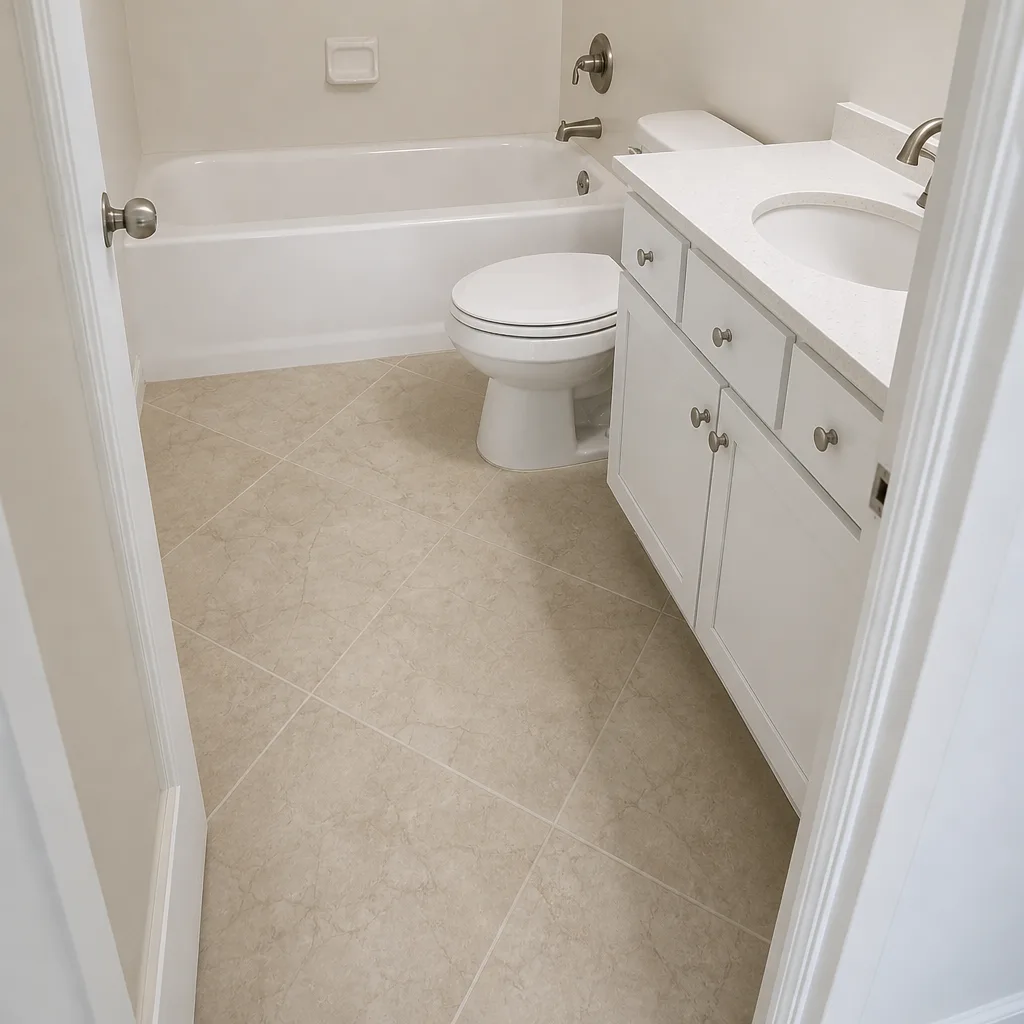
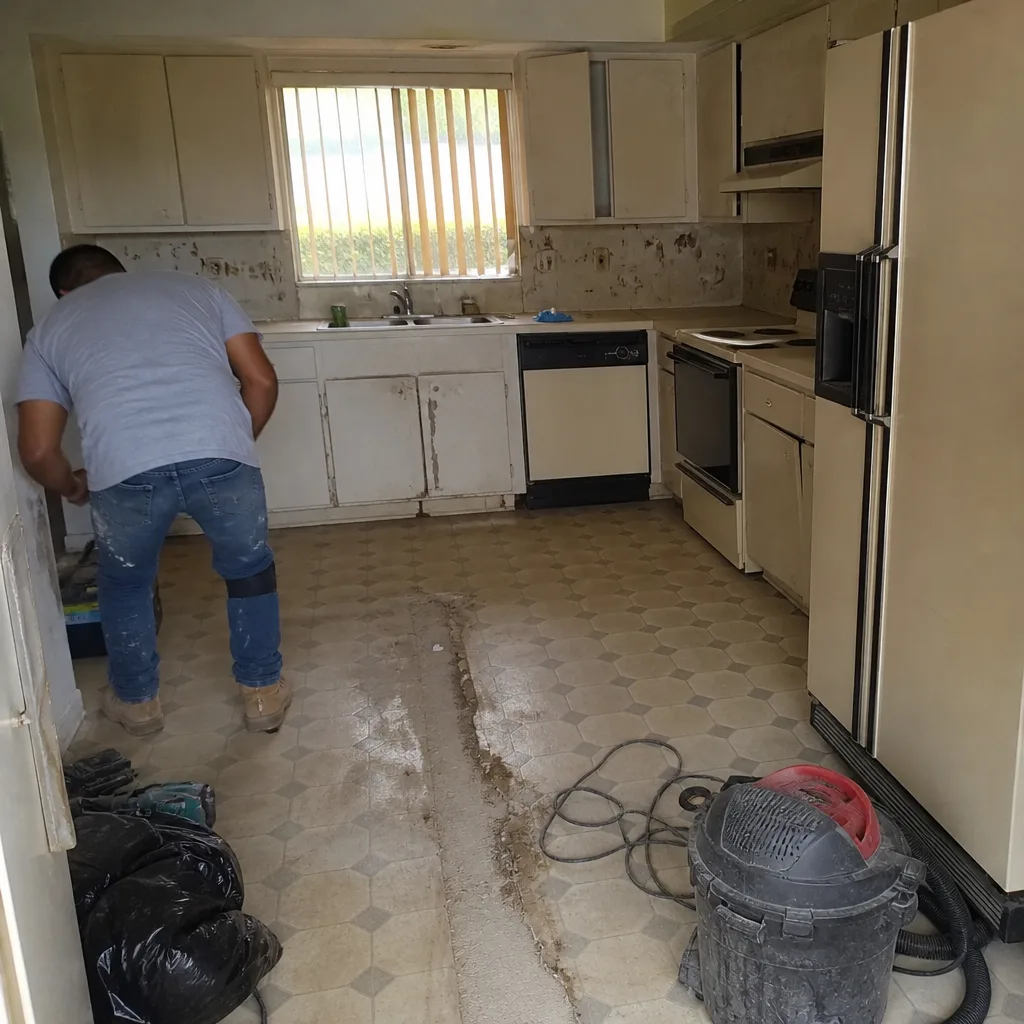
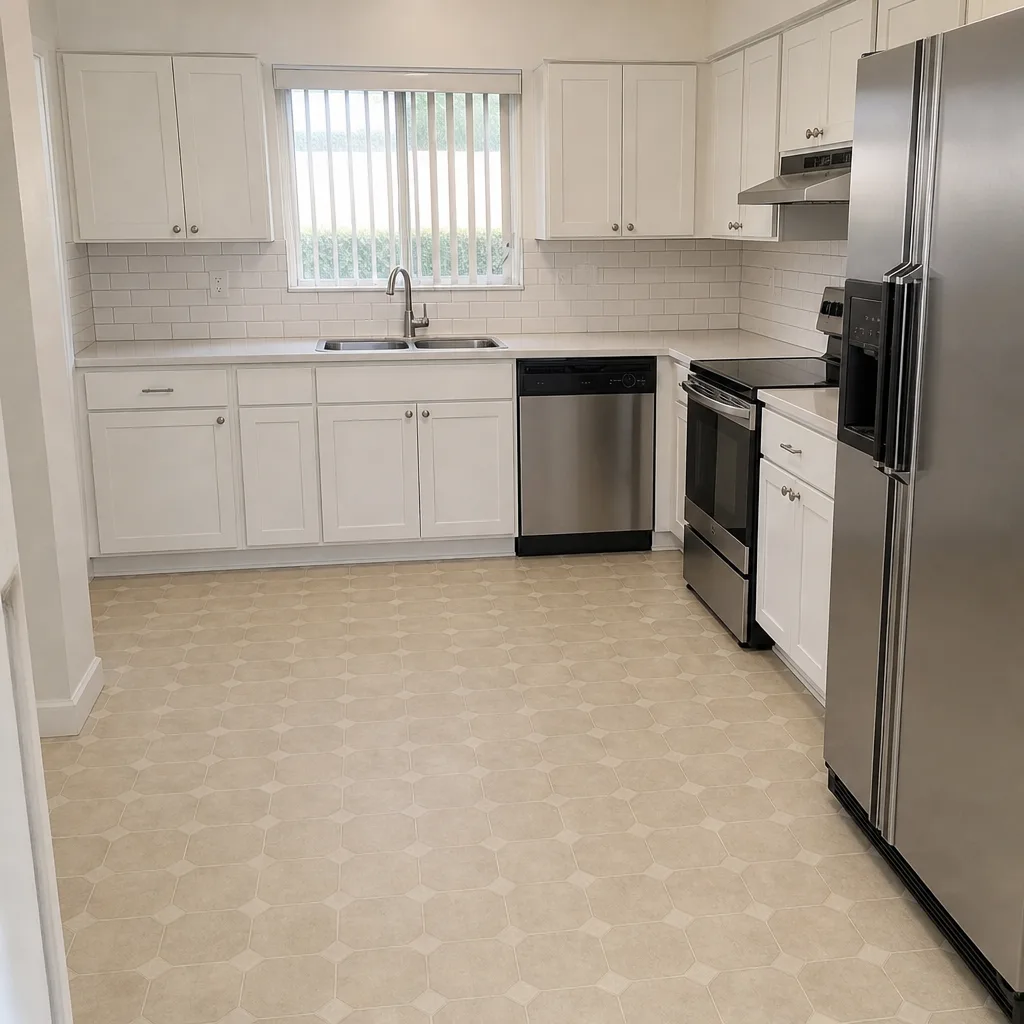
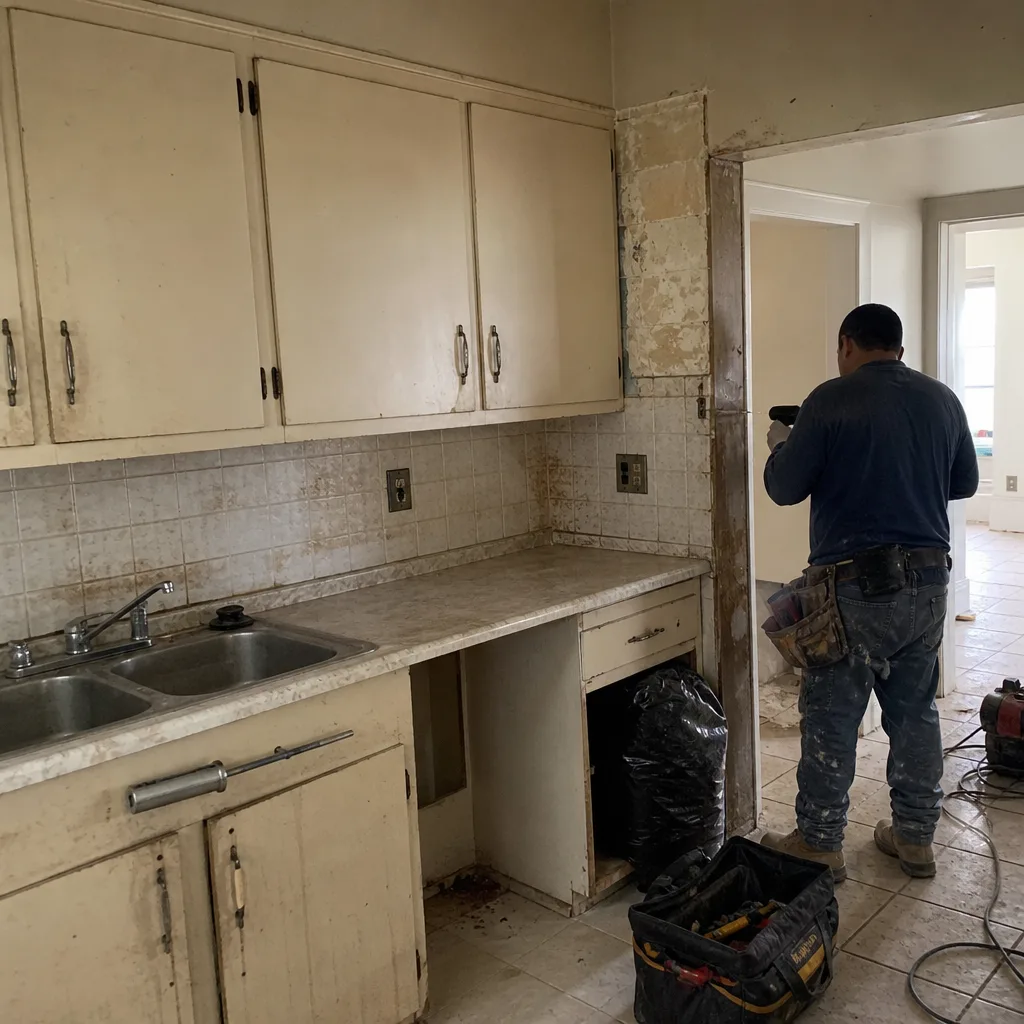
See the difference
 Before
 After
 Before
 After
 Before
 After
When to Call a Professional
Call a professional if you see any of the following: hollow-sounding patches covering more than a few square feet of stucco, rust at window or door frame corners with a visible stain, a diagonal crack wider than a hairline, a door that’s started to stick in one room only, fog between window panes, granule loss that’s visible at the downspout outlet after every storm, or a ceiling stain that appeared after a storm. Also call if you’re not sure. A free inspection is the cheapest step in any of these categories, and it’s the one that tells you whether you have a cosmetic issue or a repair project. Groundwork Construction Co. of Aventura offers free estimates in Aventura – call (833) 716-6251. Our technicians have up to 12 years of experience, arrive in uniform, and have seen every one of these warning signs in this market, on every kind of home.
Frequently Asked Questions
The most serious warning signs are hollow-sounding stucco, rust streaks at window and door frames, growing diagonal cracks, foggy windows, and granules collecting at downspout outlets. Each one signals a problem that has already been active for months or years. A cosmetic crack is nothing to worry about; a crack you’re tracking that’s grown, plus a rust streak at the same wall, is a real problem. The combination is what to take seriously, not any single sign in isolation.
Tap the wall around the crack with a screwdriver handle. Solid stucco sounds like a dense thud; stucco that’s lost its bond sounds hollow. Mark the ends of the crack with a pencil and check in 90 days. If it’s growing, or if the tap test sounds hollow, it needs repair. Cracks in Aventura’s coastal environment are common, and the tap test is the fastest way to tell the difference without special tools. If the hollow area is larger than a few square feet, call a professional for an estimate.
Rust around a window frame means the fasteners or flange have been corroding, and the seal around the frame has likely failed. The wall cavity behind the window may be wet. In Aventura’s salt air, standard steel fasteners corrode steadily, and the visible rust is the late stage. The fix is to remove the window, replace the fasteners with stainless or hot-dip galvanized, and reseal the flange. A bead of caulk over the rust is not a repair; the corrosion continues underneath.
In a dry climate, cracks usually come from the soil drying and shrinking. In Aventura, the water table is high, and the soil stays wet most of the year, so cracks are more often from water movement and settlement than from drying. That means a crack that appears in a dry-climate home might mean the foundation needs to be re-hydrated; in an Aventura home, the same crack often means drainage is concentrating water at one corner of the slab or that a plumbing line is leaking under it. The warning sign is the same; the cause, and the fix, are different.
Granule accumulation at downspout outlets, membrane separation along a shingle seam, and flashing gaps around vents and wall junctions are the warning signs to watch for before a shingle goes missing. Shingle loss is the late stage. Granules at the downspout mean the shingle surface is degrading; a lifted seam or cracked caulk at a vent means water is already getting in. Check these from the ground after a storm. Do not walk the roof; get a professional inspection if any of these signs show up.
Yes – the checklist in this guide covers most of what a homeowner can safely inspect from the ground and from inside the house. Stucco tapping, window frames, interior door operation, and ceiling stains are all DIY-safe. Anything on the roof, any crack in the foundation, and any electrical or gas concern should be handled by a licensed professional. The free estimate from Groundwork Construction Co. of Aventura is a good next step if the checklist turns up more than one warning sign. Call (833) 716-6251 for a free estimate.
The Bottom Line
The warning signs in Aventura that matter are the ones already months or years into a problem: hollow stucco, rust at the window frame, growing cracks, granules at the downspout, and caulk where flashing belongs. Each is caught sooner with a ten-minute walk twice a year. If more than one shows up at once, get a professional inspection before the next wet season. Groundwork Construction Co. of Aventura brings a 730-Day Done Right Promise, upfront pricing with no surprises, and background-checked, uniformed technicians to every project – from foundation to finish line. If you’re not sure whether what you’re seeing is cosmetic or serious, get an answer before the repair bill does. Call (833) 716-6251 for a free estimate, or start with our Groundwork Construction Co. of Aventura home page to see the full range of work we handle across Aventura. We answer the phone 24/7 with a live person, and every estimate includes a written scope with line-item pricing. If the inspection turns into a project, you’ll know the price before work starts – that’s the way it should have been the first time.
Written by the team at Groundwork Construction Co. of Aventura.