


Free written scope consultation - allowances, timeline, and change-order rules on paper before a single trade is scheduled
Styles & brands we work with
- Kitchen remodeling
- Bathroom remodeling
- Home additions & ADU
- Roofing
- Windows & doors
- Driveway & pavers
- Fence
See the difference
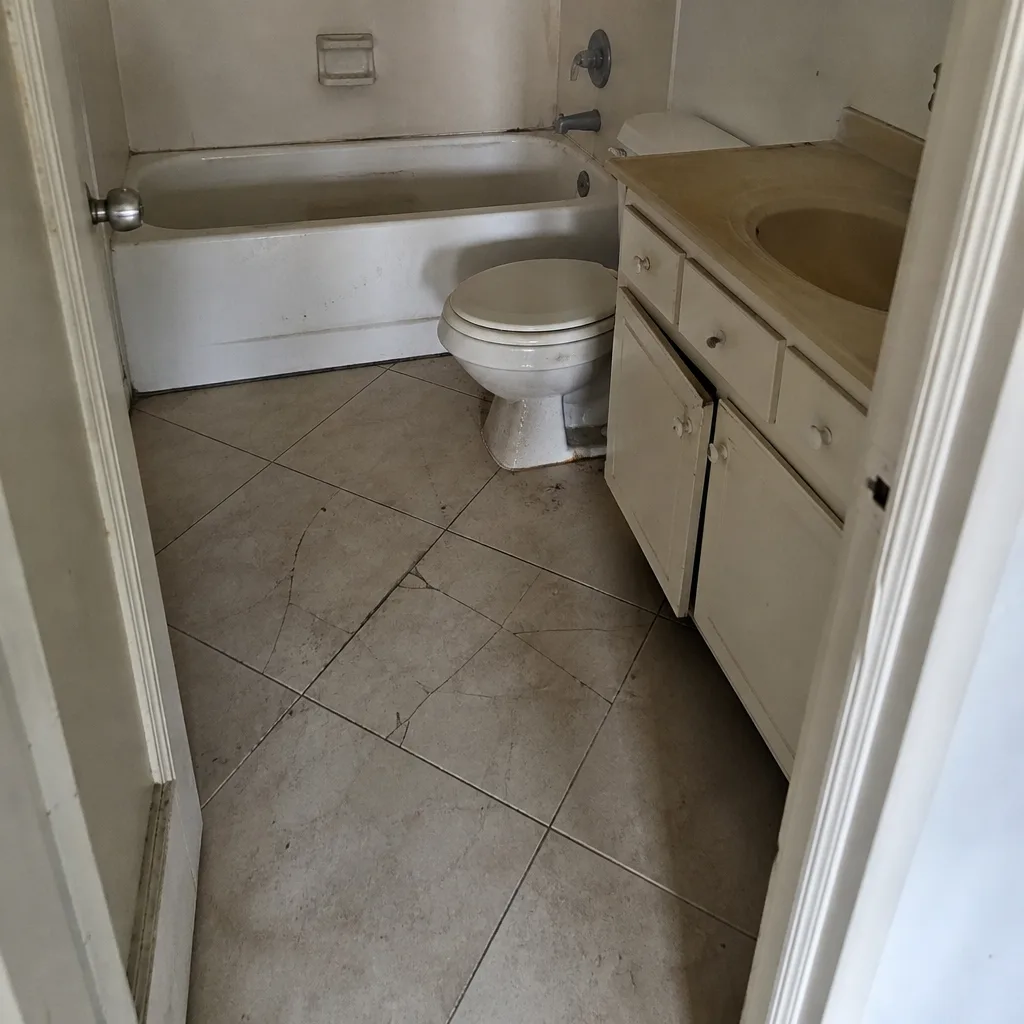 Before
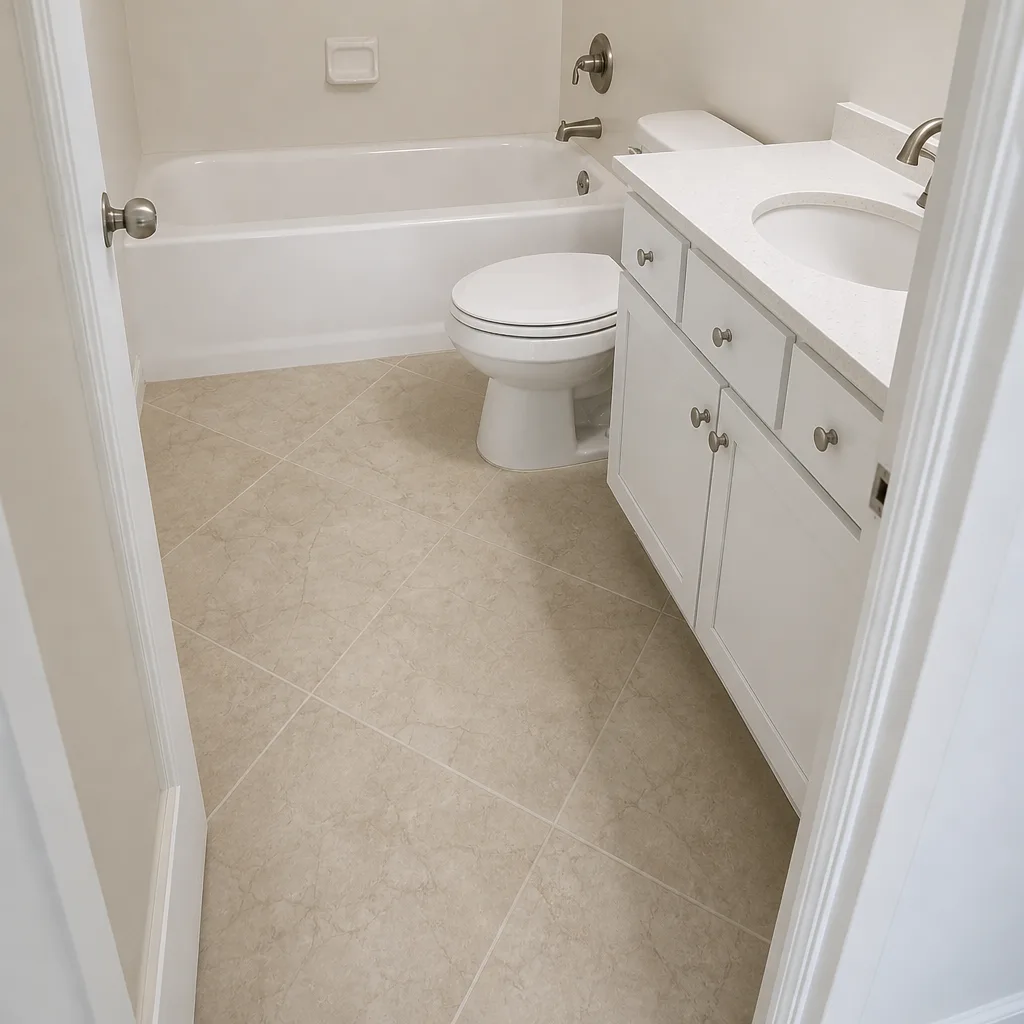 After
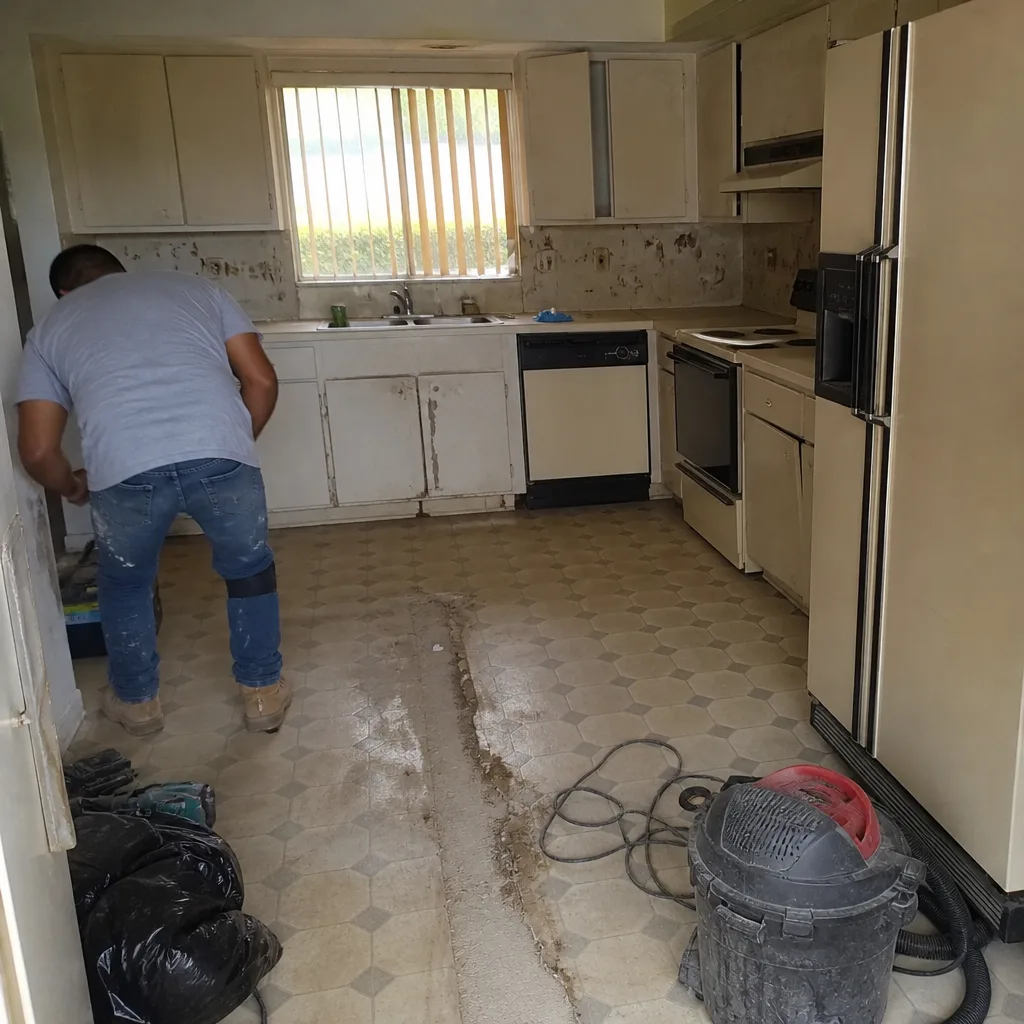 Before
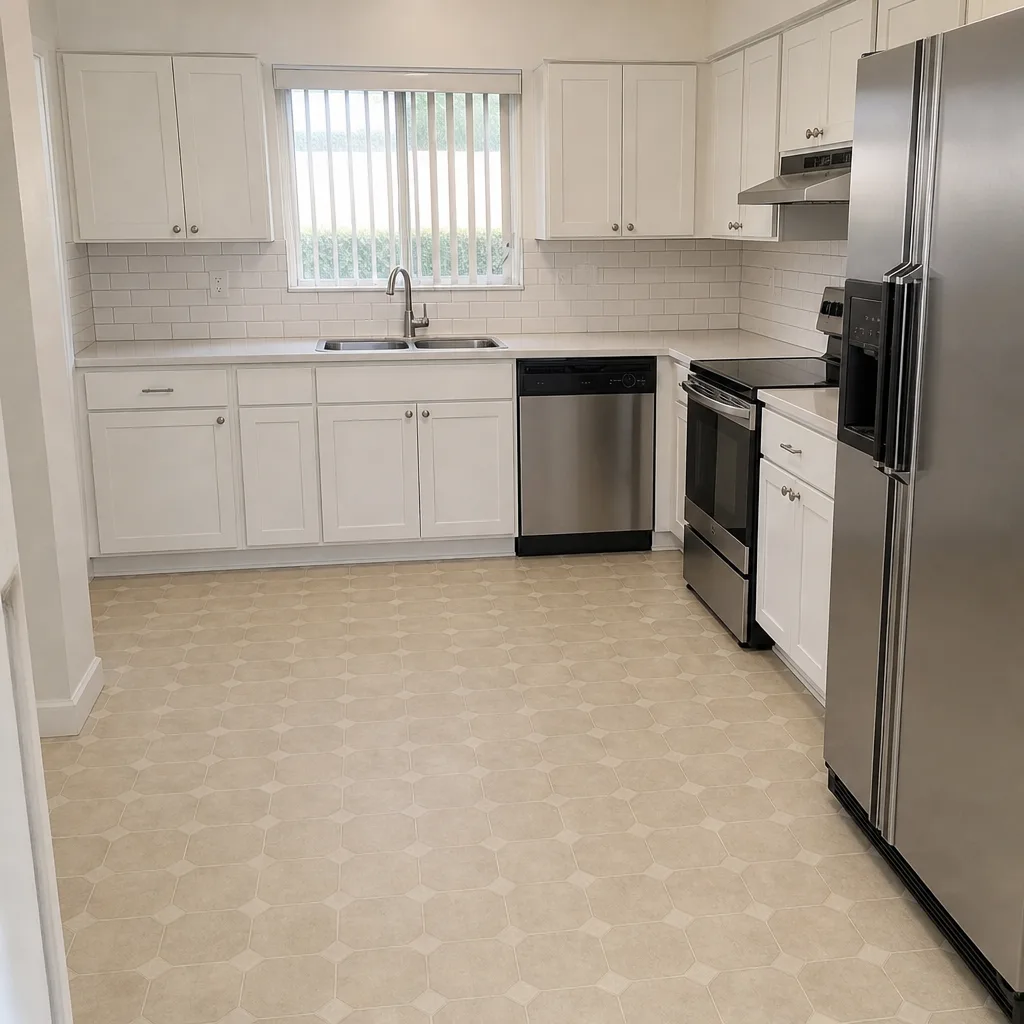 After
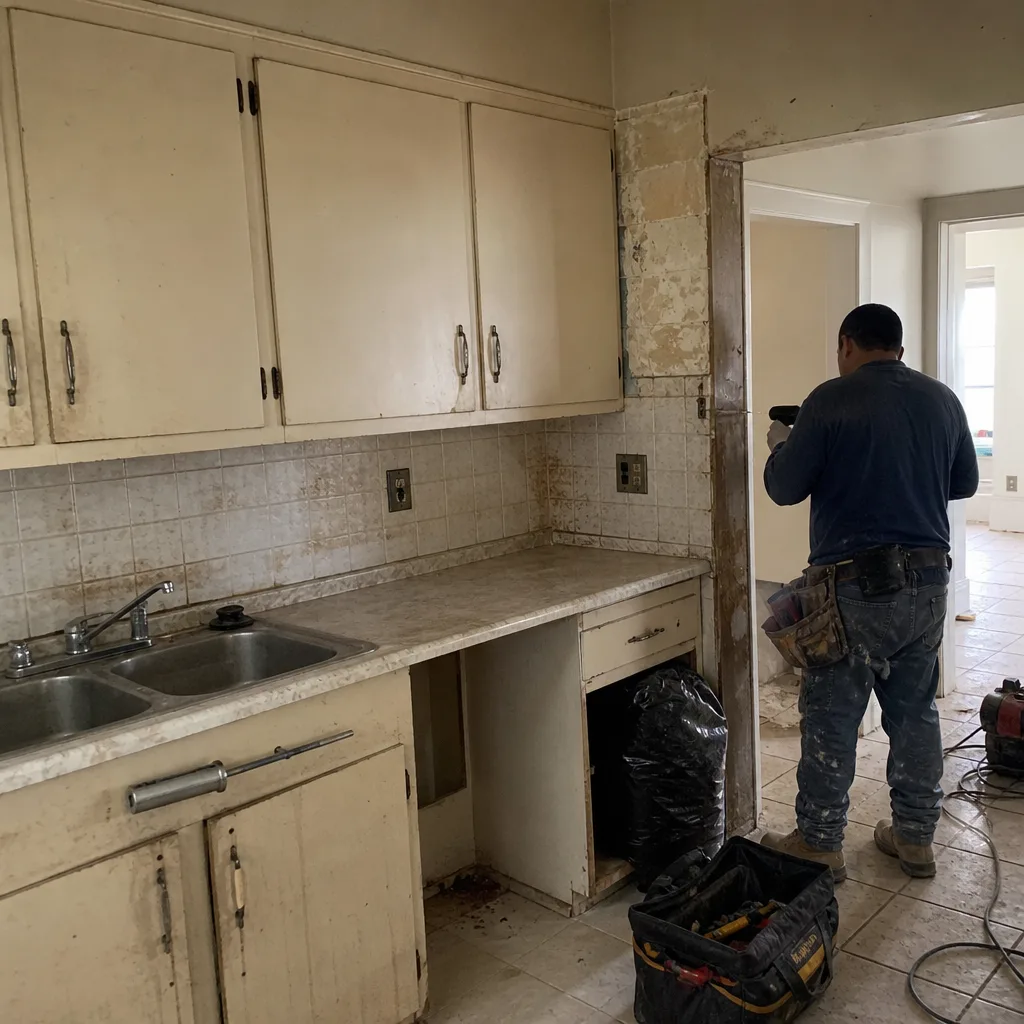 Before
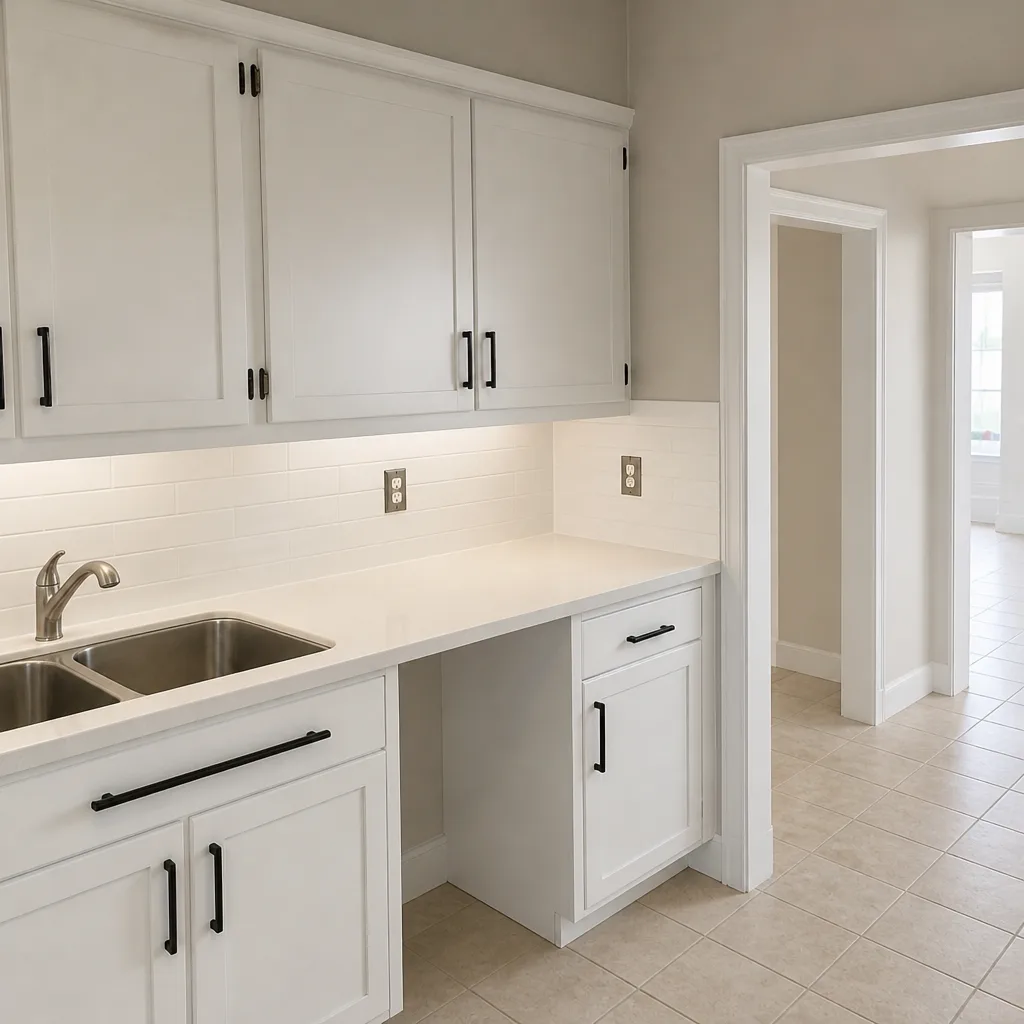 After
Roof Hail Damage Signs in Aventura, FL: What You’re Actually Looking At
If you’re seeing granule loss, dents, or cracked tile on your roof right now, it almost certainly isn’t hail. Aventura gets maybe one meaningful hail event per decade, and South Florida’s warm sea-surface temperatures make large hail extremely rare. What you’re looking at is almost always impact damage from hurricane debris, coconut palm fronds, or wind-driven gravel – a different insurance category with different documentation requirements. Getting that distinction right matters more than any hail-damage checklist you’ll find online. If you want a trained eye on it, call Groundwork Construction Co. of Aventura at (833) 716-6251.
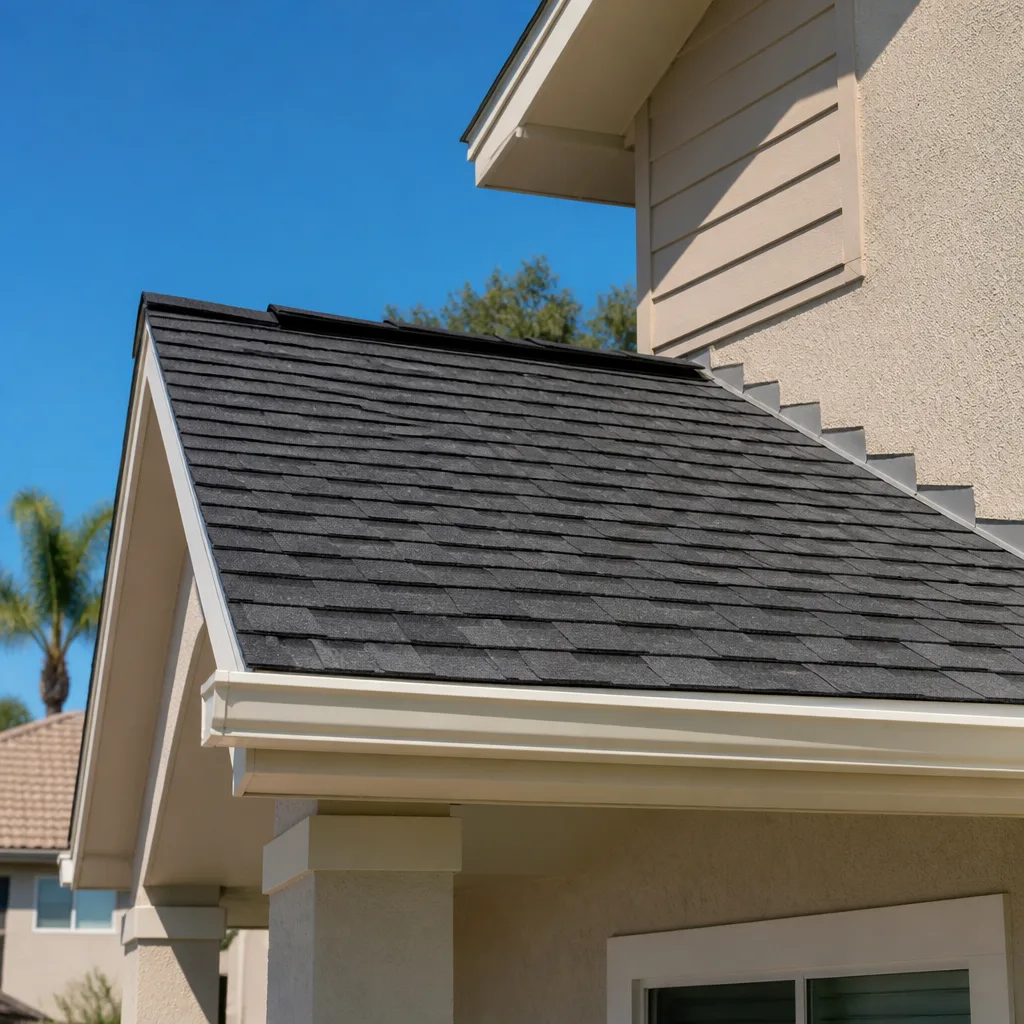
Why “Hail Damage” Almost Never Means Hail in Aventura
Hail forms when updrafts in a thunderstorm carry water droplets high enough to freeze, then cycle them through supercooled layers until they’re heavy enough to fall. South Florida’s atmosphere rarely cooperates. The warm sea-surface temperatures offshore and the shallow, moisture-heavy profile of our summer storms keep the freezing level high and the updrafts broad rather than violent. The result: lots of rain, plenty of lightning, and hailstones the size of a pea on the rare occasions they show up at all.
Aventura’s housing stock makes this conversation even more specific. The city is dominated by 1970s-2000s high-rise condominium towers and townhome communities, which means most roof surfaces here are concrete tile, modified bitumen on low-slope sections, or architectural shingle on the townhome rows. Hail that would total a shingle roof in Dallas does almost nothing to a barrel tile roof in Aventura. That’s a useful fact when a storm-chasing contractor knocks on your door after a tropical system and tells you the whole roof needs replacing.
Here’s what we see instead, and it’s what actually sends homeowners searching for “hail damage” in the first place:
- Coconut palm frond strikes. A green frond weighs 10 to 30 pounds and comes down with a hard, glancing blow. On tile, it cracks the surface in a linear pattern. On shingle, it scuffs the granules in one direction. Neither looks like hail.
- Wind-driven gravel and roof ballast. Common on the low-slope sections of older towers. Gravel launches horizontally in high wind and leaves gouges and scuffs on the windward elevation only.
- Debris impacts from neighboring roofs. When a nearby building loses tile or a metal vent cap, those pieces land on your roof and leave irregular craters. Aventura’s density means your roof is downstream of several others.
- Granule loss from UV and heat cycling. This is the big one, and we’ll cover it below.
What True Hail Damage Looks Like (For the Rare Event It Happens)
If Aventura does get a hail event – and it happens, just not often – here’s what a genuine hail claim looks like on each roof type, and how it differs from the debris damage we see far more often.
| Sign | True Hail Damage | Debris / Impact Damage |
|---|---|---|
| Shingle surface | Random circular impact points, exposed black fiberglass mat in a round spot | Linear scuffs, directional granule loss, irregular shapes |
| Soft metals (gutters, flashing, vents) | Dented with rounded, circular dimples | Bent, creased, or torn in one direction |
| Concrete tile | Starburst fracture pattern radiating from a center point | Cracked in a line, chipped at edges, or cracked along the course |
| Pattern across the roof | Random distribution, most hits on the slope facing the storm | Clustered near tree overhangs, one elevation, or near the ridge |
That last row is the one insurance adjusters key on. Hail hits at an angle driven by the wind and leaves a random scatter. Debris falls and rolls, so it clusters. If your “hail damage” is concentrated under a coconut palm or lined up along one elevation, it’s not hail – and an adjuster will spot that in about thirty seconds. Filing a claim anyway risks a denial on your record, which can affect your insurability in Florida’s tightening market.
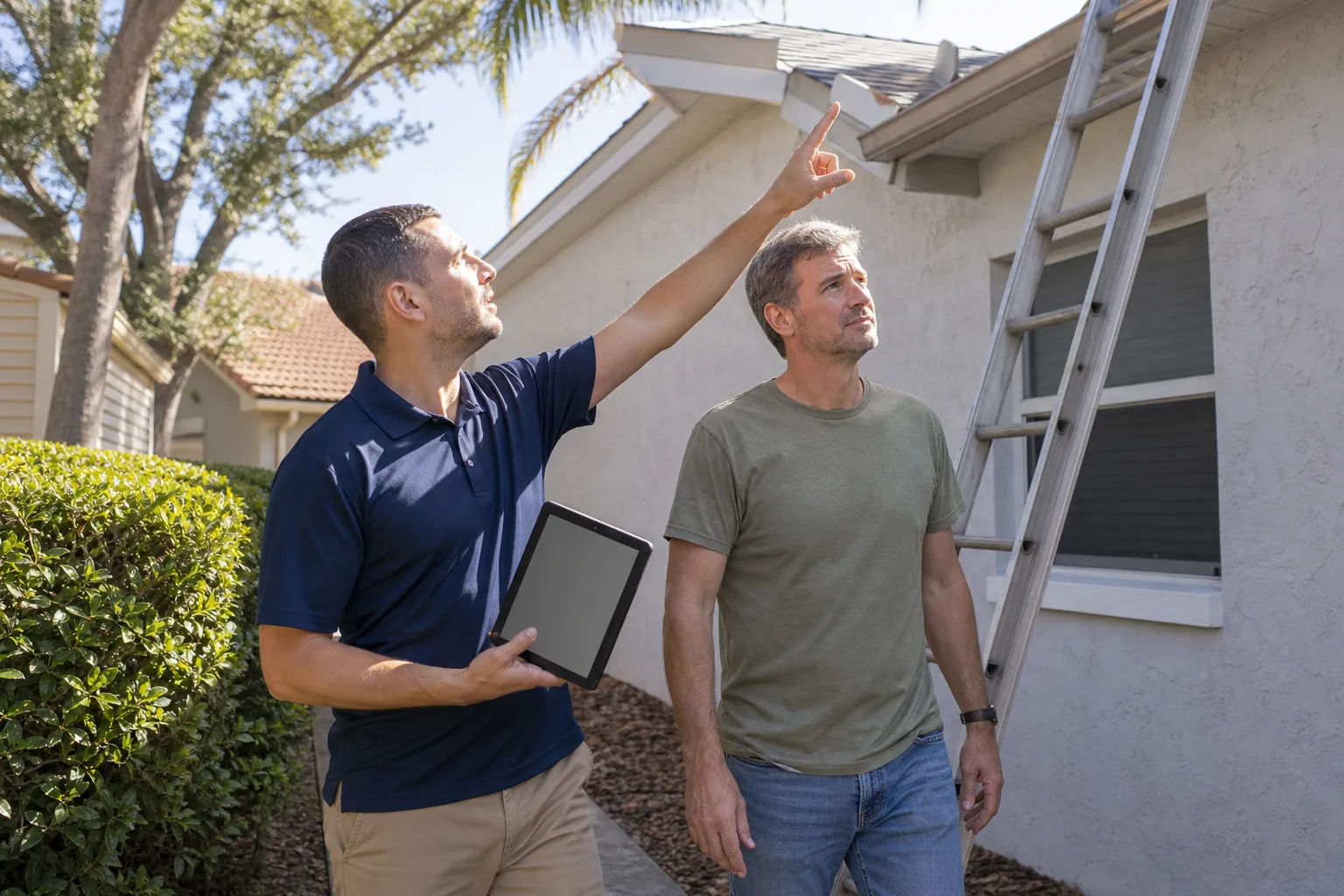
One safety note before you climb up there: walking a tile roof, especially a 30-year-old one on a tower four stories up, is a genuine fall and breakage risk. Tile that looks intact can crack under foot, and the underlying underlayment may already be compromised. This is a job for a trained inspector with the right equipment, not a homeowner with a ladder.
What Granule Loss on Your Aventura Roof Actually Means
Granule loss is the number-one reason Aventura homeowners end up on a page about hail damage. They see the dark patches in the gutter, the bare spots on the shingle, or the granules collecting in the downspout strainer, and they assume a storm did it.
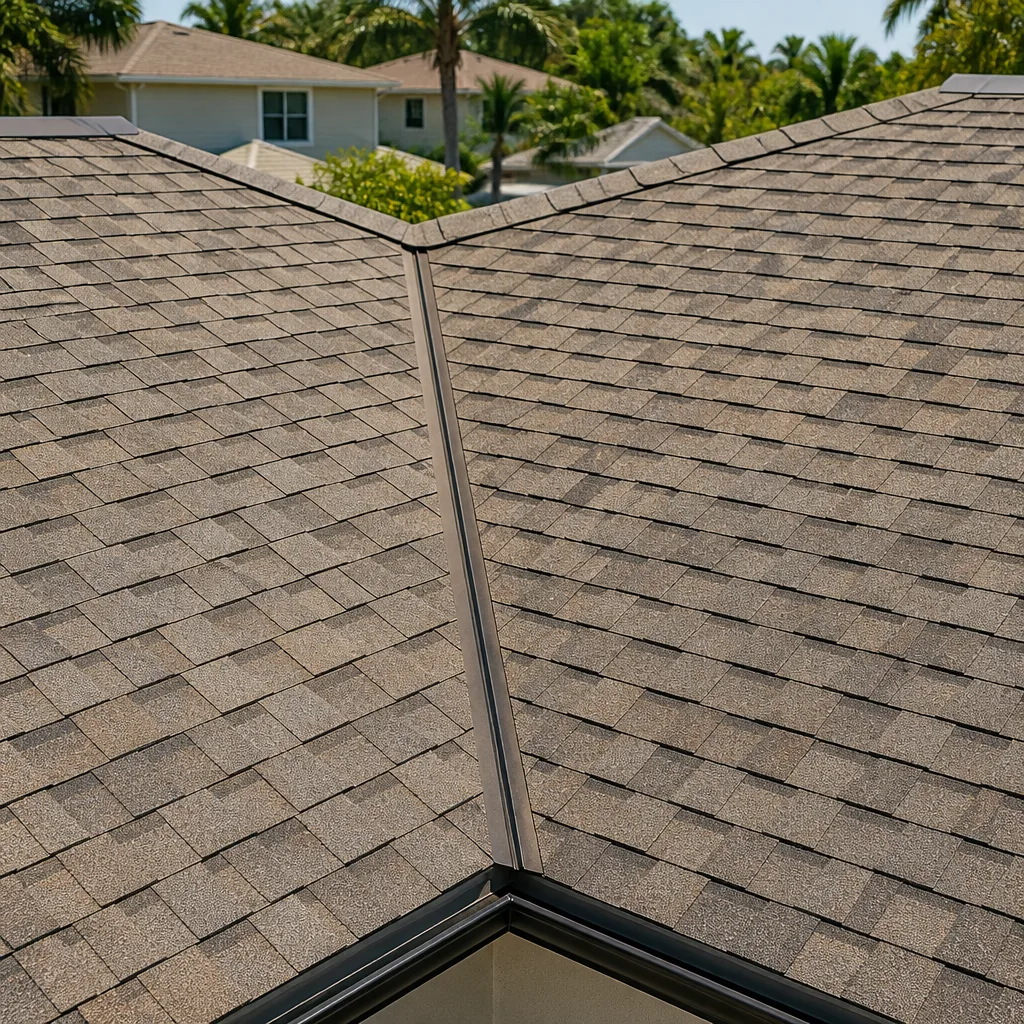
Almost always, it’s the sun. South Florida’s UV index runs high year-round, and an architectural shingle in Aventura takes more UV load in a decade than the same shingle in most of the country takes in twenty years. Add the daily heat cycling – shingles expand and contract with the afternoon sun and the overnight cooldown – and the asphalt binder that holds the granules in place dries out and lets go. That’s climate wear, not storm damage.
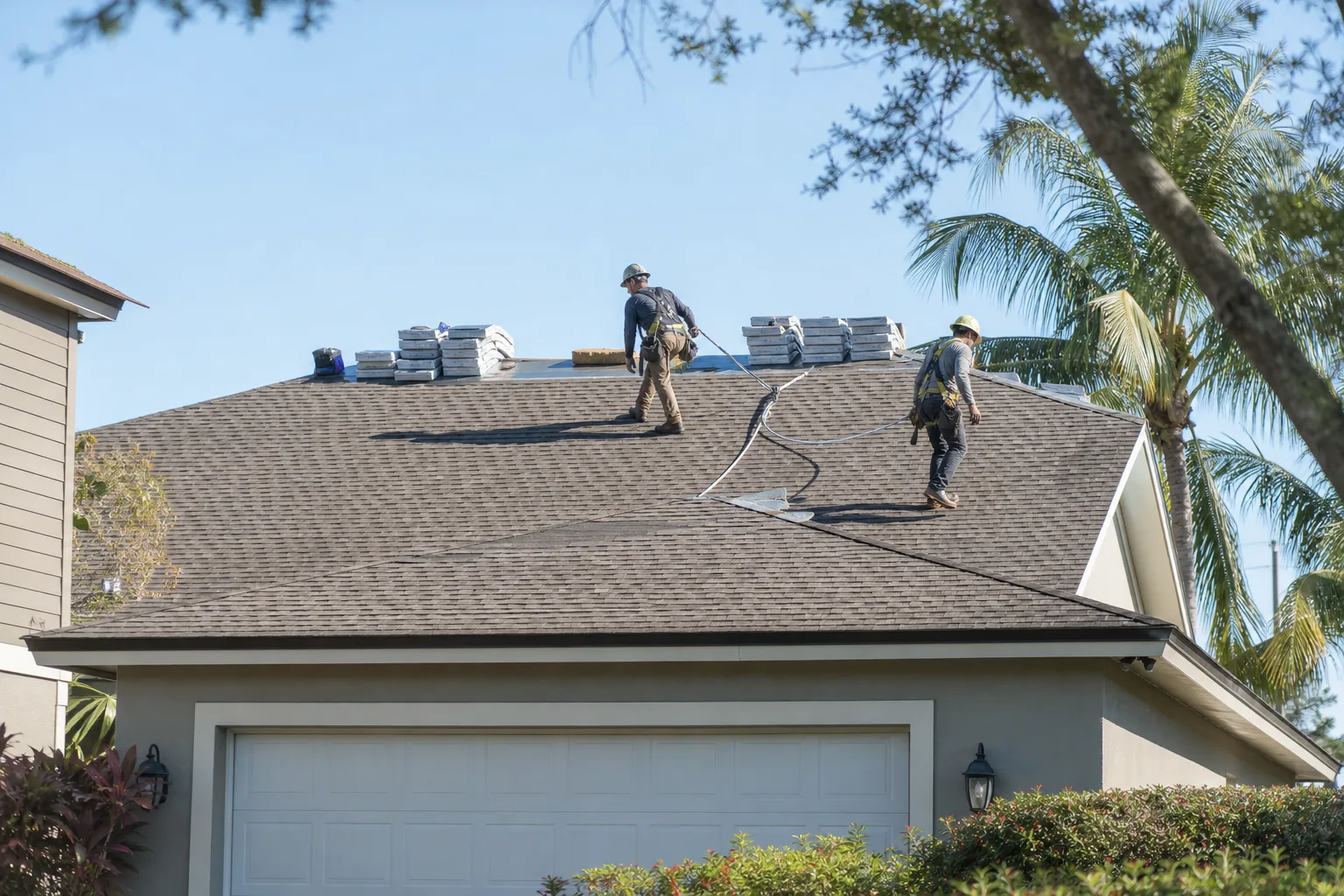
Why it matters: granule loss from UV is generally not an insurance claim. It’s a maintenance signal and a replacement conversation. Filing it under a storm claim usually gets denied, and denied claims get logged. But a roof past its granule-retention window is also more vulnerable to real damage when the next system comes through – so the conversation isn’t “ignore it,” it’s “plan for it.” Most Aventura townhome shingle roofs we inspect with significant granule loss are somewhere between 15 and 22 years old, which puts them right at the end of their service life. If you’re in that window, it’s worth understanding what a proper Roofing replacement involves before the next named storm forces the issue.
When we inspect, we’re also looking at the flashing and penetrations. On the aging towers and townhomes around Aventura, wind uplift is what displaces the metal flashing at chimneys and vent stacks, and displaced flashing is what lets water into the deck. Sealant failure at penetrations is silent until you’ve got a ceiling stain – and by then the deck has been wet for weeks. That’s the kind of thing our technicians are trained to catch, and it’s the reason we recommend a post-storm inspection even when the roof looks fine from the ground.
The Post-Storm Inspection Sequence That Actually Matters in Aventura
After a tropical system passes, the ranking of what to check is different here than it would be in a hail state. Here’s the order we work in:
- Flying debris impacts on tile. The first pass is a walking inspection of the field tile for cracks, chips, and slipped or displaced pieces. A single cracked tile is a $600-$2,500 tile roof repair, and catching it before water gets into the underlayment is the whole game.
- Flashing displacement from wind uplift. Every vent boot, chimney counter-flashing, and step flashing gets checked for lifting, back-out of fasteners, and separation. This is where most post-storm leaks originate.
- Sealant failure at penetrations. Anywhere the roof was penetrated – satellite mounts, conduit, HVAC curbs – the sealant gets checked for cracking and pull-away.
- Photograph everything. The documentation window closes fast. Photograph each finding with something in the frame for scale, note the elevation and compass direction, and keep the timestamps. That’s what makes an insurance claim work versus getting denied.
That 48-hour window after a storm passes is when the real damage documentation happens. By Monday morning, tree crews and window companies have already been through, and the evidence has been moved. Having a contractor who answers the phone on a Sunday afternoon – which we do, live person, 24/7 – is the difference between a clean claim file and a contested one. Groundwork Construction Co. of Aventura handles these inspections as a standing service, and we bring the same background-checked, uniformed technicians to a $400 repair as we do to a full replacement.
On the repair-versus-replace question that always follows: a $400-$1,800 roof repair makes sense when the damage is isolated and the roof has life left. A full roof replacement in Aventura typically runs $8,000-$20,000 with a GAF or Owens Corning system, and the math shifts decisively toward replacement once you’re past roughly 10% of the roof surface or the roof is over 18 years old. We walk that math out loud with you, upfront pricing, no surprises, and every job is covered by our 730-Day Done Right Promise – if it’s not done right, we make it right. For larger projects, we also offer 0% financing for 18 months and $1,000 off projects over $10,000.
One more local reality worth knowing: in Aventura, roof work on a tower or gated community usually means navigating COA approvals, elevator-protection rules, noise-hour limits, and post-Surfside milestone-inspection and reserve-study requirements that simply don’t exist on a new-build house in a neighboring city. If your roof is a common element, the board has to sign off before a single shingle moves. Knowing that sequence saves weeks.
FAQs
True hail damage in Aventura shows as random circular impact points on shingles with exposed fiberglass mat, round dimples in soft metals like gutters and flashing, and a starburst fracture pattern in concrete tile. If the damage is clustered under a tree, directional, or concentrated on one elevation, it’s almost certainly debris impact rather than hail – and that’s what we find in the large majority of Aventura inspections.
In Aventura, granule loss is almost always age and UV wear, not hail. South Florida’s high UV index and daily heat cycling dry out the asphalt binder that holds granules in place, and shingle roofs here typically show significant loss between 15 and 22 years. That makes it a replacement conversation rather than an insurance claim. Call (833) 716-6251 for a free inspection – we’ll tell you which it is.
Roof repair in Aventura typically runs $400-$1,800, and tile roof repair typically runs $600-$2,500 depending on the number of cracked or displaced tiles. Full roof replacement runs $8,000-$20,000. Call (833) 716-6251 for an exact quote – estimates are free and the price we quote is the price you pay.
Yes – we take post-storm inspection calls around the clock, and a live person answers every call, 24/7. That 48-hour window after a system passes is when damage documentation actually happens, so we prioritize getting someone out fast. Call (833) 716-6251 and we’ll set it up.
Get a Straight Answer on Your Roof
If you’d rather have it looked at by someone who can tell hail from a palm frond in the first ten minutes, Groundwork Construction Co. of Aventura offers a no-pressure assessment in Aventura – call (833) 716-6251. We serve homeowners across our Aventura service area and the surrounding communities, and every inspection comes with a straight answer and a written range, not a sales pitch. From foundation to finish line, we’re the full-scope partner you can reach on a Sunday. Groundwork is ready when you are.
Written by the team at Groundwork Construction Co. of Aventura, serving Aventura, FL.