Last updated November 18, 2026

Free written scope consultation - allowances, timeline, and change-order rules on paper before a single trade is scheduled
Bathroom Remodeling Warning Signs Every Homeowner Should Know
The grout cracking at your shower corners isn’t an aesthetic issue – it’s your first written notice that the waterproofing membrane underneath may already be compromised. Most Aventura homeowners catch a failing bathroom remodel three to six months too late, when the soft spot underfoot has spread or the smell in the vanity cabinet won’t leave. The early signals are subtle, and the window between “minor correction” and “full tear-out” is narrower than anyone wants to admit. This guide walks you through every warning sign – the ones in a contractor’s proposal, the ones you can watch mid-project, and the ones that show up after the crew leaves – so you can act while the fix is still cheap. We’ve watched enough Aventura bathrooms fail to know exactly where to look.
Quick Answer
Bathroom remodel warning signs fall into three stages: pre-hire red flags in the proposal (missing waterproofing line items, vague substrate prep, no inspection schedule), mid-project signals (tile set before waterproofing cures, no flood test on the shower pan, drywall where cement board belongs), and post-completion failures (soft subfloor, efflorescence on grout, doors that won’t close, sudden musty odor). If you catch a sign in the first two stages, it’s usually a correction. If you’re seeing the third set, the waterproofing has likely already failed and Florida’s humidity has been hiding it from you.
Styles & brands we work with
- Kitchen remodeling
- Bathroom remodeling
- Home additions & ADU
- Roofing
- Windows & doors
- Driveway & pavers
- Fence
Table of Contents
- Pre-Hire Warning Signs in a Contractor’s Proposal
- Settling Cracks vs. Structural Movement Cracks: Where to Look
- Mid-Project Warning Signs You Can Monitor Without Being an Expert
- Post-Completion Signals That the Work Is Failing
- Why Aventura’s Humidity Masks Water Intrusion Longer Than Dry Climates
- What a Properly Built Bathroom Actually Looks Like
- The Cost of Waiting: Minor Correction vs. Full Tear-Out
Pre-Hire Warning Signs in a Contractor’s Proposal
The most expensive mistakes in a bathroom remodel happen before a single tile is ordered. A proposal tells you exactly what a contractor plans to do – and just as importantly, what they plan to skip. When a bid on a $30,000 to $55,000 Aventura bathroom (typical range for a full gut with a tile shower and quality fixtures) comes back suspiciously low, the missing money almost always comes out of waterproofing or substrate prep. Those are the two line items that have no visual appeal at the end but determine whether the bathroom lasts fifteen years or five.
Here’s what to scan for in writing:
- No waterproofing line item. A proper shower requires a bonded membrane, either a liquid-applied product from a brand like Schluter, Laticrete, or Mapei, or a sheet membrane, applied over cement backer board. If the proposal just says “tile shower” with no waterproofing named, that’s a red flag the size of Biscayne Boulevard.
- “Prep included” with no detail. Substrate prep isn’t a single step. It’s demo, framing correction, plumbing rough-in inspection, backer board installation with proper fastening, taping and mudding of seams, and a flood test on the shower pan. Any proposal that collapses these into one line is either cutting corners or hiding cost.
- No permit pull mentioned. In Aventura, pulling a plumbing or electrical permit for a bathroom remodel is a code requirement, and the inspection schedule touches waterproofing at two or three points. A contractor who suggests skipping permits is telling you who they are.
- No named brands on fixtures. Vague fixture allowances let a contractor swap a Kohler shower valve for a no-name import with a two-year cartridge life. Ask for specific model numbers.
- No written warranty length. Workmanship warranties under two years don’t cover the period when waterproofing failures actually show up. The Groundwork Construction Co. of Aventura home page lays out what a written 730-Day Done Right Promise looks like in practice.
Also watch the “we’ll figure it out as we go” line. Some discoveries genuinely happen mid-demo, but a contractor who can’t describe their waterproofing schedule before starting has never had one fail back on them.
Settling Cracks vs. Structural Movement Cracks: Where to Look
Not every crack in a bathroom is a warning sign. Knowing the difference between normal settling and structural movement saves you from panic – and, more importantly, tells you when to call for a real inspection. In Aventura homes, which range from 1970s-era condos off Collins Avenue to newer builds near Aventura Mall and Sunny Isles, both types appear, and they look completely different once you know what you’re reading.
Normal settling cracks look like this
- Hairline cracks under 1/16 inch wide, usually diagonal at a ceiling corner or along a joint between two walls
- Vertical cracks running down from the corner of a window or door frame, straight and thin
- Cracks that appeared once in the first couple years of the building and haven’t moved since
- Cracks along grout joints that follow the tile layout (seasonal expansion, not failure)
Structural movement cracks look like this
- Horizontal cracks at any height on a wall (walls do not crack horizontally unless something is moving)
- Cracks wider than 1/8 inch, or cracks that grew visibly over a few months
- Stair-step cracks running through mortar joints in masonry, in a diagonal staircase pattern
- Cracks that appear alongside doors that suddenly won’t latch, or floors that feel uneven underfoot
- Cracks radiating from the corners of a tile field in a spider pattern (often a sign the tile is moving off the substrate)
Where to look in a bathroom specifically: check the joint where the tile meets the ceiling, the corners of the shower enclosure where two tiled walls meet, the seam between the shower curb and the floor tile, and the tile-to-drywall transition at the room exit. The last one is the crack most homeowners miss – it opens when the shower pan is moving under the weight of daily use.
Mid-Project Warning Signs You Can Monitor Without Being an Expert
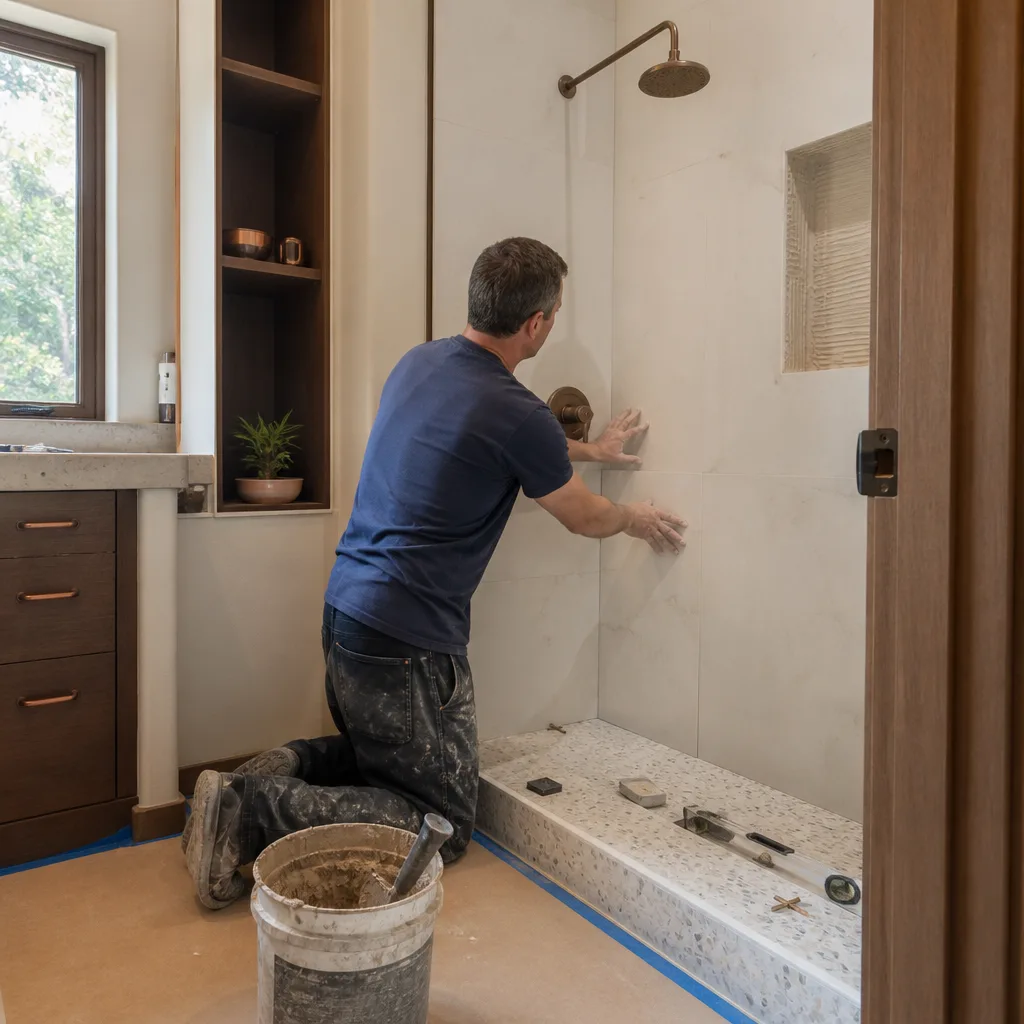
You don’t need to read a membrane datasheet to know when a job is going sideways. These are the observations any homeowner can make on a walkthrough, and they’re the ones we coach clients on before we ever start demo. If you see any of these in your Aventura bathroom remodel, ask the site lead directly and expect a clear answer on the spot.
- Tile is going up before waterproofing has fully cured. Liquid membranes need 24 to 48 hours between coats, and sometimes longer in Aventura’s humidity. If tile is set the same day the membrane was rolled on, the membrane never cured and the shower will leak.
- Drywall is being installed in the shower. Regular drywall (white paper face) or even greenboard or purpleboard are not waterproof. Cement backer board or a foam tile backer like Kerdi-Board or Wedi is the minimum. If you see paper-faced drywall inside a wet zone, stop the job.
- No flood test on the shower pan. A proper shower pan gets filled with water and left for a minimum of 24 hours with a visible water line marked on the wall. No flood test, no proof of pan integrity.
- No rough-in inspection before tile. In Aventura, plumbing rough-in gets inspected before walls close. If the crew is tiling and no inspection sticker or paperwork exists, something’s wrong.
- Fasteners aren’t going through the backer board properly. Backer board should be fastened with the manufacturer’s specified screws at the specified spacing, set in thinset or sealant per spec. Loose boards sound hollow when tapped. Tap them.
- Changes are happening verbally. Any change to layout, fixture, or waterproofing method should be captured in writing before the work proceeds. Verbal scope creep almost always results in the wrong material being used.
- The site is being cleaned before the work is finished. Odd but real – a crew that sweeps up and stages the finished bathroom early is often a crew that’s pushing to close the job before curing times are complete.
A properly sequenced Aventura bathroom remodel has inspection points the crew has to hit before each stage closes up. Ask for the inspection schedule in the proposal and hold them to it. When we bring in partners for Home Additions & ADU in Aventura or a bathroom job, we walk clients through the schedule so nothing happens behind a wall without a signature.
Post-Completion Signals That the Work Is Failing
This is where most Aventura homeowners end up calling – after the work is “done” and something feels wrong but they can’t name it. These are the specific signals that tell you the waterproofing, plumbing, or substrate has already failed, even though the room looks beautiful.
- Soft spots underfoot. Walk barefoot across the bathroom floor and press firmly. Any give, sponge, or softness – especially near the shower, toilet, and vanity – means water has reached the subfloor. A healthy tile floor over proper substrate will feel like concrete. No flex, ever.
- Efflorescence on grout. White, powdery, salt-like staining on grout lines or tile edges is efflorescence. It forms when water moves through masonry and deposits mineral salts on the surface as it evaporates. It doesn’t happen in a dry bathroom. Every efflorescence bloom is a moisture trail to chase.
- Doors that suddenly won’t close. The bathroom door that used to latch but now sticks, or the pocket door that’s suddenly hard to slide, is a sign the framing or floor has moved. Water intrusion and wood swelling is the most common cause, and it appears before any visible staining.
- Musty smell that wasn’t there before. If your bathroom has developed a smell you can’t scrub away, that’s microbial growth behind the tile or under the floor. It often shows up first in the vanity cabinet where the plumbing penetrates the wall. Sniff there first.
- Grout that turns dark and stays dark. Staining that used to scrub out but now doesn’t is a sign the grout is saturated – usually from behind. Water is coming through the backer, not the surface.
- Tile that pops off or sounds hollow. Tap the tile field with a coin. Solid tile sounds dense. Hollow tile has lost its thinset bond, which almost always means the substrate is wet.
- Caulk that won’t stay sealed at the shower perimeter. If you’re replacing the caulk at the shower floor every six months, the shower pan is moving and no caulk will hold it.
Two of these together, especially soft floor and efflorescence, mean the waterproofing has already failed. One alone is worth an inspection. Call (833) 716-6251 for a free estimate on the repair before you schedule a single cosmetic fix.
Why Aventura’s Humidity Masks Water Intrusion Longer Than Dry Climates
Here’s the thing most homeowners in South Florida don’t hear from their contractor, and it’s the single most important reason to be more proactive in an Aventura bathroom, not less. Water intrusion in a Phoenix home announces itself in weeks: wood dries out, cracks open, stains bloom on the ceiling of the room below. Water intrusion in an Aventura home takes months or years to show, because the ambient humidity is already at 70 to 85 percent and the building materials have no reason to release the moisture that’s trapped behind the tile.
A few Aventura-specific realities:
- The wall cavity doesn’t dry. In a dry climate, a small leak evaporates through the backer board and drywall. In Aventura, the outside air is as humid as the inside of the wall, so there’s no vapor drive pulling moisture out. The leak just sits there.
- Air conditioning hides mold’s smell. Aventura homes run AC almost year-round, and the constant air exchange pulls musty bathroom air out through the return before the smell concentrates enough for you to notice. In a home that opens windows, you’d smell a failing shower within a month. Here, it can go a full season quietly.
- Condensation on tile looks normal. Every Aventura bathroom has condensation on the mirror and tile after a shower. That daily wetness is exactly the environment a failing membrane needs to grow mold without any visible clue.
- Afternoon thunderstorms push moisture against the exterior. Aventura’s rainy season (June through October) drives water laterally against the outside walls of the home. Any crack or failed seal at a window or exterior wall of the bathroom becomes an entry point during a heavy cell.
The practical takeaway: inspect your bathroom monthly, not annually. Run the fan during every shower. Feel for soft spots quarterly. And when something feels off, don’t wait to “see if it gets worse” – the whole point is that in Aventura, it doesn’t get worse visibly for a long time. It gets worse invisibly. That’s the environment window and door installs are built to handle too; you can see how we think about exterior seals on our Fence Installation in Aventura and window work.
What a Properly Built Bathroom Actually Looks Like
Knowing what’s wrong is half the job. The other half is knowing what “right” looks like so you can hold your contractor to it, whether that’s a full remodel or a smaller scope project. Here’s what every correctly built shower – the part of the bathroom that fails 90 percent of the time – looks like at each stage.
- Demo and framing. Old tile, backer, and rot come out to bare studs. Rotted framing is replaced, not “treated.” Plumbing and electrical are roughed in and inspected before anything closes up.
- Backer board installation. Cement board or foam tile backer is fastened per manufacturer spec, seams taped and mudded with the same manufacturer’s system components (mixing systems from different brands voids warranties).
- Waterproofing. A continuous membrane is applied over backer, into the shower pan, up the walls at least to showerhead height, and out past the curb. Corners and penetrations get specific sealing components, not just a smear of silicone.
- Flood test. Pan holds water for 24 hours, marked and witnessed. In Aventura this is sometimes the most important step of the entire job because failures here show up in the unit below.
- Tile install. Thinset coverage above 90 percent (not “spot-bonding” the corners and calling it done), proper grout joint width, expansion joints at perimeters.
- Grout and sealant. Grout per manufacturer spec, cured, then a penetrating sealer. Anywhere two planes meet (wall to floor, wall to wall), a flexible sealant goes in instead of rigid grout so the joint can move.
- Fixtures and final inspection. Shower valve, trim, glass. Final plumbing and electrical inspection signed off before the job is closed.
On our side, every stage has a walkthrough checkpoint – and if something isn’t right at inspection, the 730-Day Done Right Promise means we come back and make it right, in writing, long after the job is closed. If your current contractor can’t explain steps 2 through 4 clearly, you’re not talking to someone who builds for the long horizon.
The Cost of Waiting: Minor Correction vs. Full Tear-Out
The single biggest determinant of cost isn’t the size of your Aventura bathroom – it’s how long you waited after noticing a sign. Here’s how the ranges typically shake out in the Miami-Dade market:
- Recaulk and reseal a shower that’s showing early grout cracks (Stage 1): $250 to $600. Catches the problem while the membrane is still intact underneath.
- Regrout with a partial membrane touch-up: $800 to $1,800. For a bathroom where water has begun penetrating joints but hasn’t yet reached the substrate.
- Tile-out repair of one shower wall or section: $2,500 to $5,500. The membrane has failed locally and the backer behind tile needs to come out.
- Full shower rebuild with new pan and wall substrate: $8,000 to $16,000. Water has reached the substrate, framing is affected, and inspection is required.
- Full bathroom remodel including subfloor replacement: $28,000 to $55,000. The failure has spread beyond the shower and the floor system is compromised.
The jump from the first range to the fourth range is the entire guide in one number: a $400 correction today versus an $11,000 rebuild in eighteen months. That’s why we tell every Aventura client to call the moment something feels soft – a free estimate is far cheaper than the demo that follows a delay. Financing helps here too; 0% for 18 months means a bathroom rebuild doesn’t have to wait until the soft spot becomes a hole.
Common Mistakes to Avoid
- Treating cosmetic repairs as fixes. Fresh caulk over failing waterproofing looks fine for six months and then the damage is exactly where it was, plus a layer of cured silicone in the way. Fix the membrane, not the caulk line.
- Skipping the flood test because “the crew said it’s fine.” In Aventura condos particularly, a failed shower pan leaks into the unit below and triggers association-level repair obligations. The flood test isn’t optional; it’s the only proof you’ll get.
- Letting a contractor “value engineer” the waterproofing. Value engineering is what contractors call cutting ingredients. Waterproofing is the one line item in a bathroom where a cheaper method is a worse method, every single time.
- Using greenboard for a wet zone. It’s still paper-faced. It still grows mold. It is not waterproof. If a proposal calls for greenboard inside a shower, that proposal is wrong.
- Ignoring the smell. Aventura’s AC hides musty odors longer than most homeowners expect. If a smell persists after a deep clean and the exhaust fan is running, call for an inspection before it becomes a health concern.
- Waiting through one more rainy season. South Florida’s rain pushes water laterally against exterior walls. If your bathroom is on an exterior wall and you noticed a crack in May, don’t let October arrive without a look.
- Choosing a contractor on price alone. The cheapest bid on a bathroom in Aventura is almost always the one missing the waterproofing line item. Compare bids line by line, not total to total.
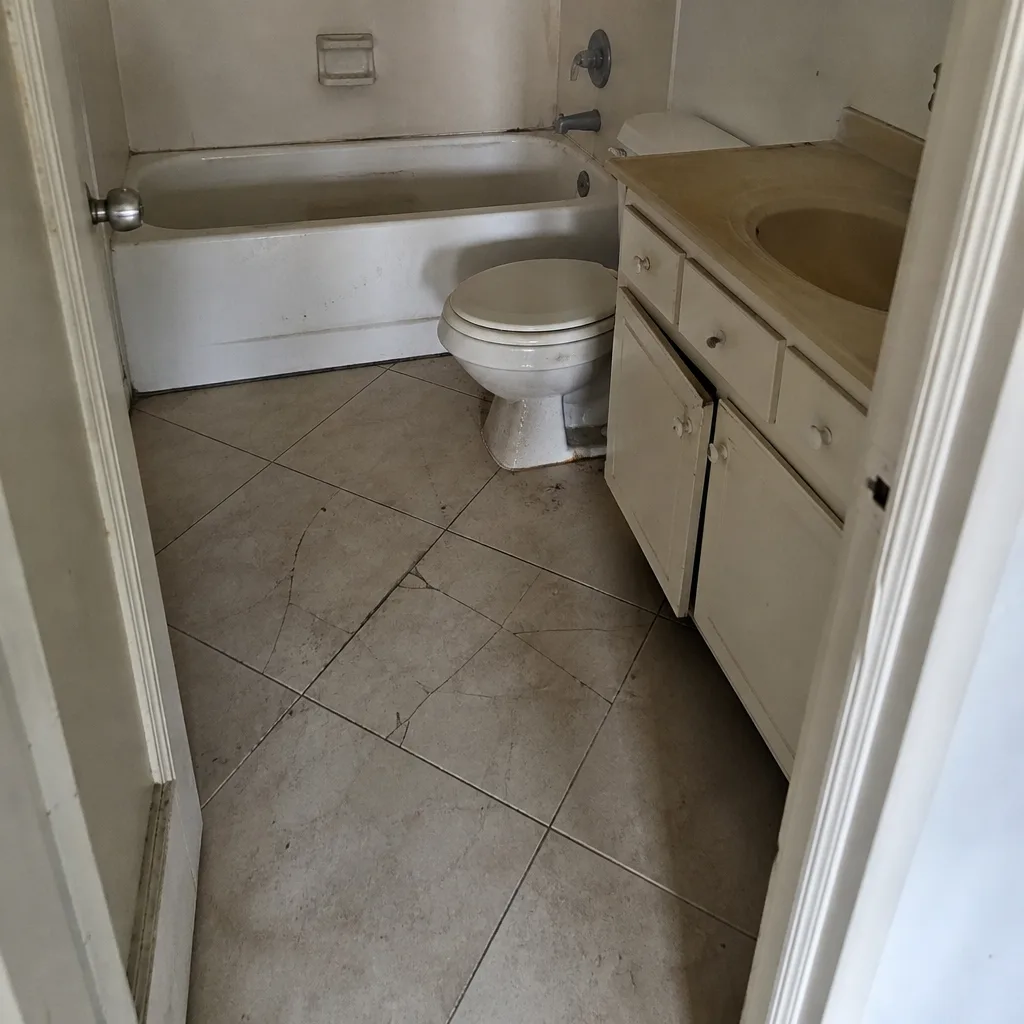
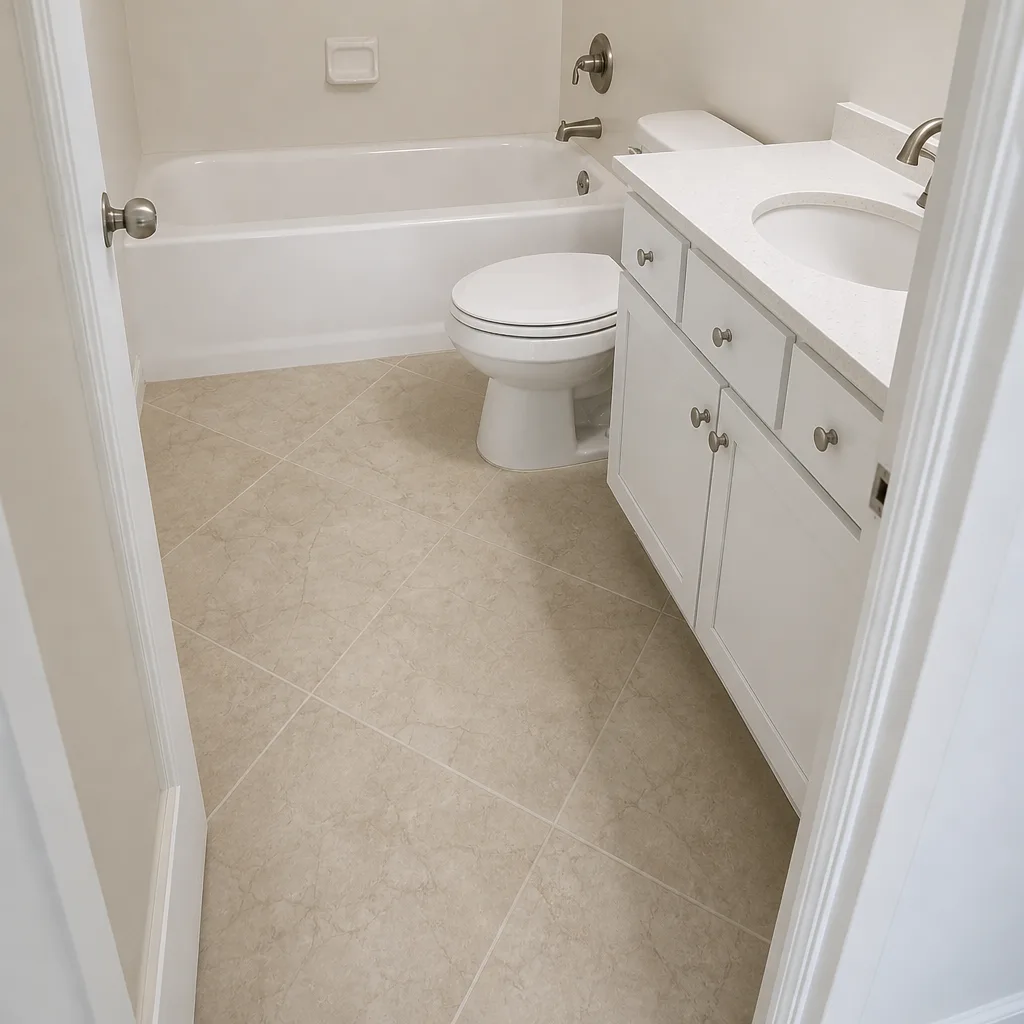
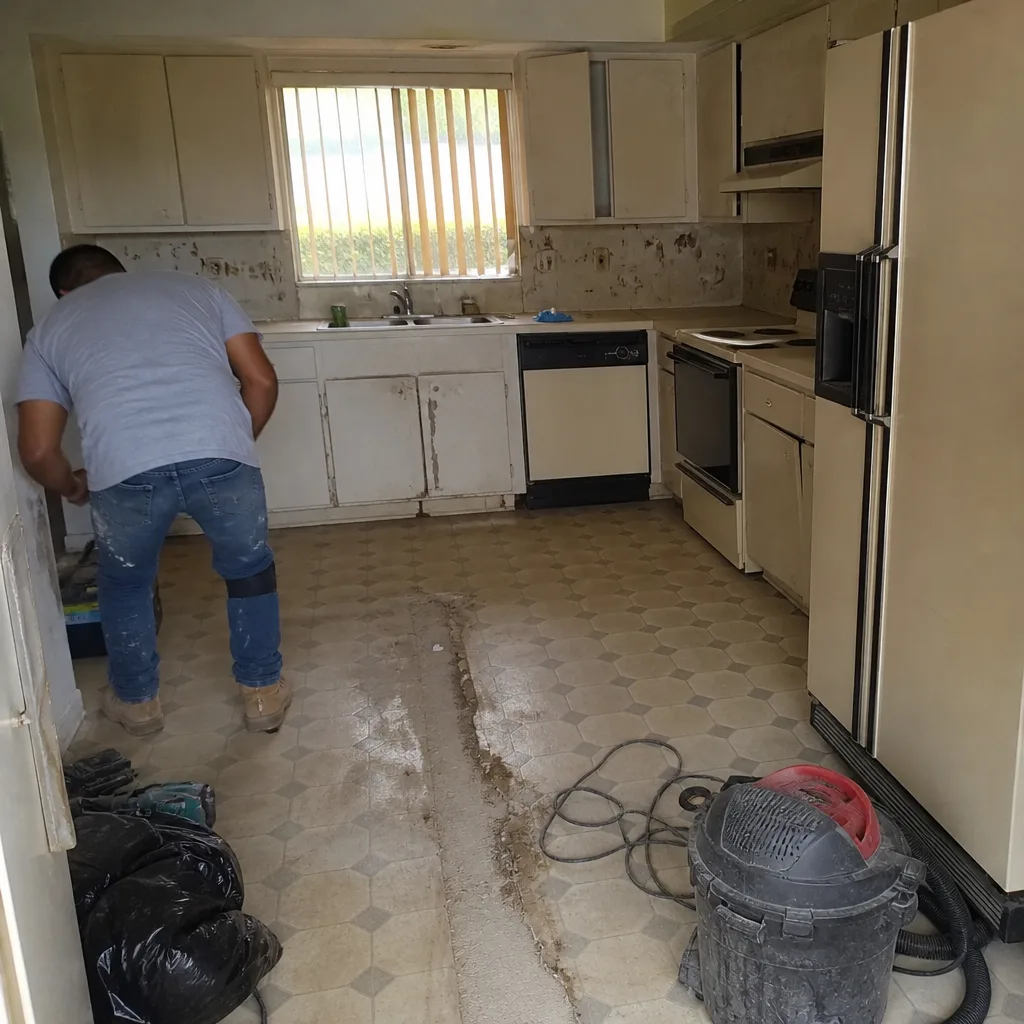
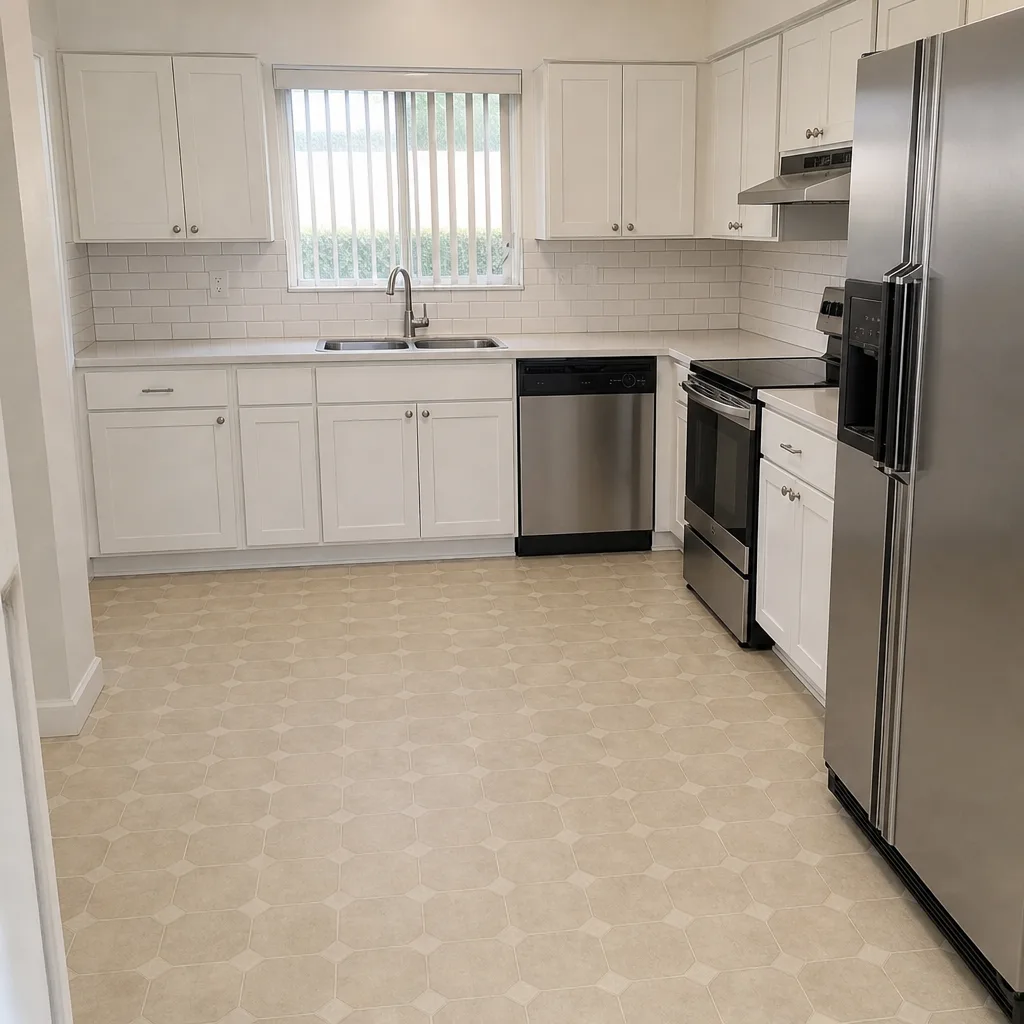
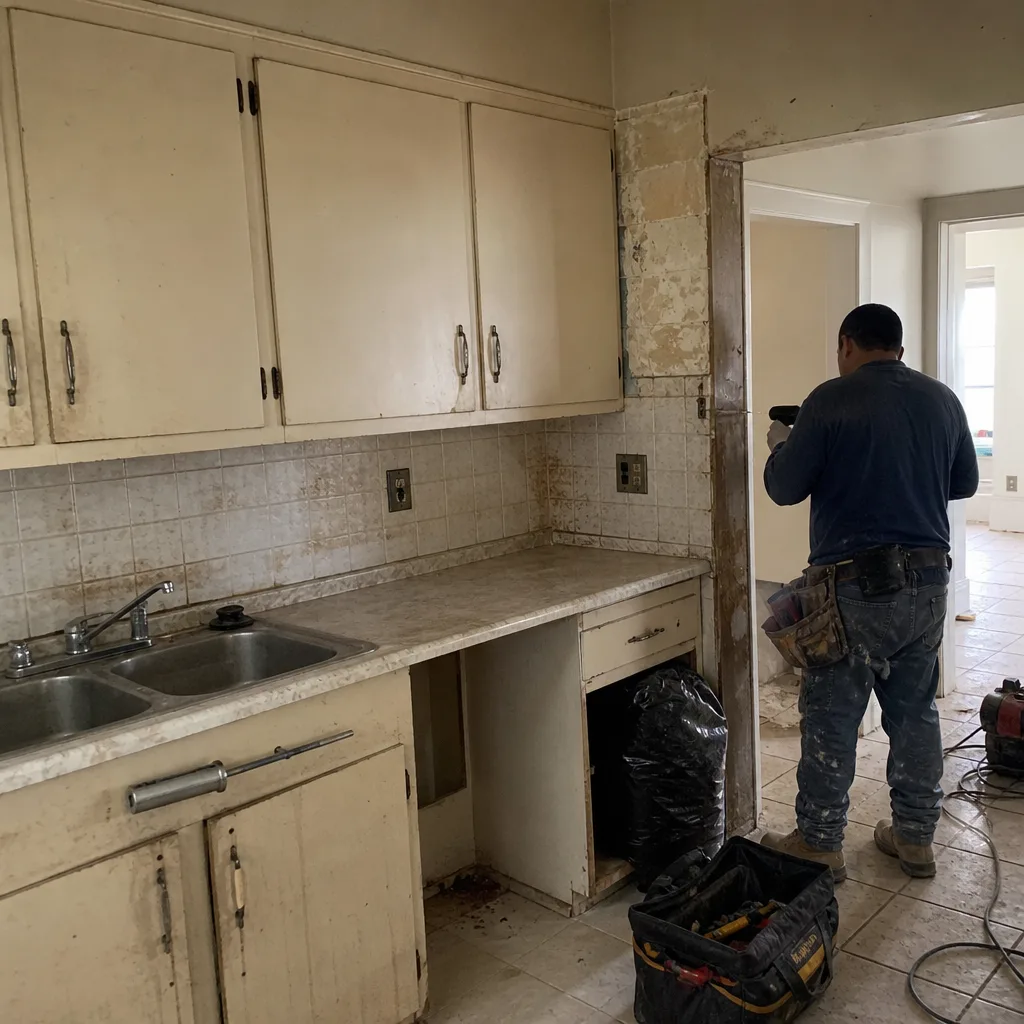
See the difference
 Before
 After
 Before
 After
 Before
 After
When to Call a Professional
Call us when the tile is popping off the wall, when the floor feels soft underfoot, when efflorescence appears on grout, when a musty smell has returned twice after cleaning, or when a door in the bathroom suddenly won’t latch. Call us when you’re evaluating a contractor’s proposal and something isn’t adding up. And call us before you sign anything on a Florida bathroom remodel – the pre-hire stage is the cheapest place to catch a warning sign. Groundwork Construction Co. of Aventura offers free estimates in Aventura – call (833) 716-6251. We’ll walk the bathroom with you, tell you what stage your risk is at, and if the fix is a $400 correction we’ll say so. Upfront pricing, no surprises – the number we quote is the number you pay, backed by a 730-Day Done Right Promise and 0% financing for 18 months if a rebuild turns out to be the right call.
We also handle the outdoor half of the equation when a bathroom problem traces back to exterior water intrusion – Driveway & Pavers in Aventura projects often reveal grading issues that push water against the house, and the same inspection instinct applies.
Frequently Asked Questions
The clearest signs of a leaking shower are soft spots in the floor around the shower base, efflorescence (white powdery staining) on grout lines, caulk at the shower perimeter that won’t stay sealed, and a musty smell that returns after cleaning. Any two of those together means you should stop using the shower until it’s inspected. Call (833) 716-6251 for a free estimate on the inspection.
Hairline grout cracks from seasonal expansion are normal; grout cracking at the corners of the shower where two walls meet is usually a warning sign. That specific location is where the shower pan moves under weight, and when grout cracks there, the flexible sealant (not grout) should have been used in the first place. If the crack keeps returning after repair, the membrane underneath is compromised.
A correctly applied waterproofing membrane over proper backer board lasts 20 to 30 years in an Aventura bathroom – the failure isn’t the membrane itself, it’s the installation. In our experience, most Aventura membrane failures trace back to skipped flood tests, tile set before the membrane cured, or drywall used inside a wet zone. When the install is right, the shower outlasts the tile on the walls.
The smell is almost always coming from microbial growth inside the wall cavity or subfloor, not from the surfaces you clean. Aventura’s air conditioning masks musty odors by constantly cycling the air out, so a small problem behind the tile can go a full season before you notice. Check inside the vanity cabinet first, then call for an inspection – a moisture reading on the substrate will confirm it in five minutes.
Yes. Plumbing, electrical, and structural work in an Aventura bathroom requires permits and inspections, and any reputable contractor pulls them before demo. Skipped permits can affect your insurance and your ability to sell the home. When a contractor suggests “we don’t need a permit for that,” they’re telling you something important about how they operate.
The difference is timing. A $400 correction catches a failing seal or grout joint before water reaches the substrate. A $12,000 rebuild happens when the waterproofing membrane has already failed and the subfloor or framing has to come out. In Aventura, humidity stretches the window between the two – the problem doesn’t look worse for months, but it’s still getting worse. If you’re unsure which side of that line you’re on, call (833) 716-6251 – the estimate is free and the answer is immediate.
The Bottom Line
The most important thing to remember about a failing bathroom remodel is that the visible sign is always the last signal, not the first. Waterproofing failures start quietly, get hidden by Florida humidity, and only announce themselves when the floor goes soft or the smell won’t leave. Your job isn’t to be an expert – it’s to watch the three stages. Read the proposal for missing waterproofing and prep. Hold the crew to inspection sequencing mid-project. Tap the tile and feel the floor when the work is done. Catch a warning sign early in Aventura and the correction is $400. Miss it and the rebuild is five figures. Call (833) 716-6251 to schedule your free estimate and get a straight answer on where your bathroom stands.
Written by the team at Groundwork Construction Co. of Aventura.